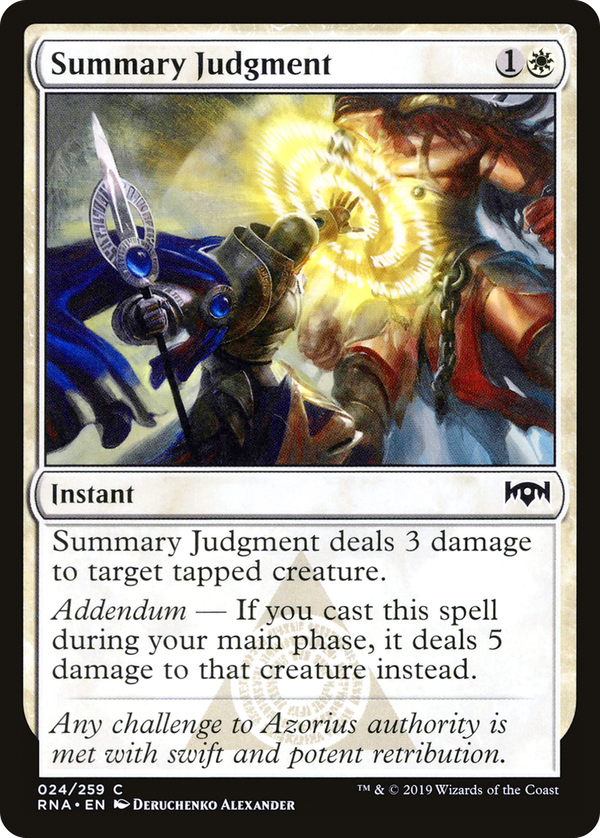
Summary Judgment


Removal usually rewards patience: you hold up the answer, let the attack come, and fire during your opponent's turn. This card runs that reflex in reverse. Fired reactively at instant speed, it deals three; fired proactively, before combat on your turn, it deals five, enough to kill nearly anything it can legally point at. But the tapped clause fights the incentive. A target has to be tapped already, and the proactive window is precisely when the opponent's board is likeliest to be untapped, sitting back and threatening a swing. So the bigger number is the harder one to earn: you need a tapper, a bounce-and-retap effect, or a creature that spent itself the previous turn and hasn't recovered. The three-damage mode is the one that arrives naturally, since combat leaves attackers tapped and ready to be answered. The gap between three and five is the price of committing to a moment, and the two clauses are deliberately set against each other: the larger payoff lives on the turn your legal targets are scarcest, while the smaller payoff sits comfortably in the reactive slot the card seems built to avoid. Most cheap white burn hands you flexibility for nothing; this one makes you declare a priority first and pays out according to which one you chose.