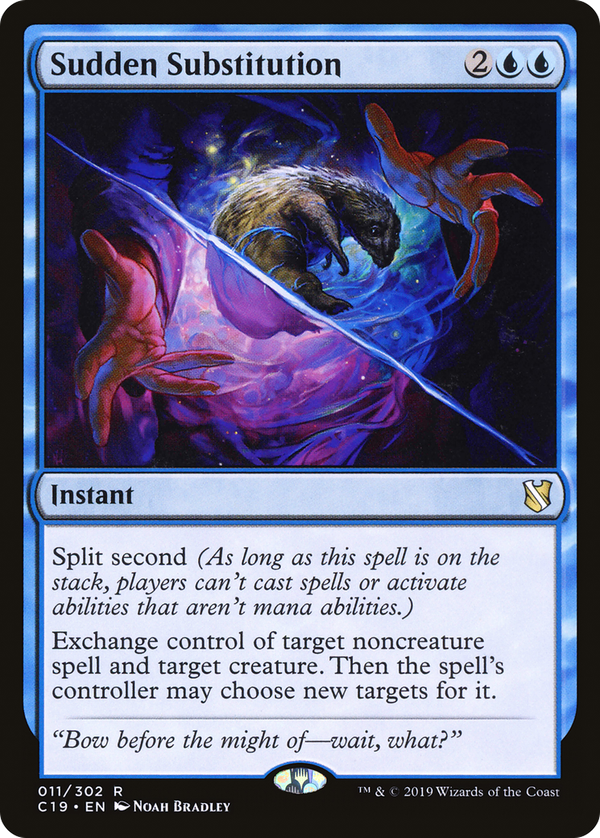
Sudden Substitution


Most control-theft effects hand you a permanent already sitting on the battlefield; this one reaches onto the stack and seizes a spell before it resolves, then lets its new controller pick fresh targets. Trade a creature to the opponent, take their counterspell or removal or ramp, and redirect it wherever hurts most: their own board, their own commander, the very play they were building toward. The exchange is the price. You are not lifting the spell for free; you hand over a body in return, but a body is cheap next to a game-defining play you can turn against its owner. Split second is what makes the theft stick at the moment it counts: while this sits on the stack, players cannot cast spells or activate non-mana abilities, so the opponent gets no chance to cast a counter or bounce the traded creature in response to the swap. That lockout lasts only as long as Sudden Substitution itself is on the stack. Once it resolves, the exchanged spell is still on the stack, now under your control with its targets rechosen, and normal responses reopen: the original controller can try to answer their own spell, or scramble to blunt the redirect before it goes off. The design bets that most opponents will not have a clean answer ready in that reopened window, and that the stolen spell is worth more to you than the creature you gave up. It reads like a corner-case answer, and it is, but the corner it lives in produces one of the cleaner blowouts blue has been allowed to keep.