Study
Enters tapped, taps for white or blue, and pays the standard tempo toll for untaxed dual fixing: the turn you surrender for the mana. The migration happens later. Once the manabase is full and this stops mattering as a land drop, the four-generic activation converts a dead slot into a slow, repeatable draw engine, turning a flooded board into Clues you crack on your own clock. That price (four mana plus the tap) is set deliberately high, because a no-strings, untargeted, spell-slot-free draw ability on a land would be oppressive at any cheaper rate. The activation carries no timing restriction, so it runs at instant speed, which is the value the sticker price hides: leave the four mana open, use it to fix or float on an opponent's turn, and only commit to a Clue if the mana would otherwise sit idle. Lands that manufacture their own late-game inevitability are an old idea, but folding Investigate into the slot changes the payout structure. The reward arrives as an artifact you sacrifice on a later turn for a fresh card, not a draw locked to the moment you pay, which decouples the mana investment from the card it eventually buys. The whole design lives in that drift: a fixing source whose value slides from the manabase to the card-advantage column as the board fills, staying live off the top long after its land-drop job is done.
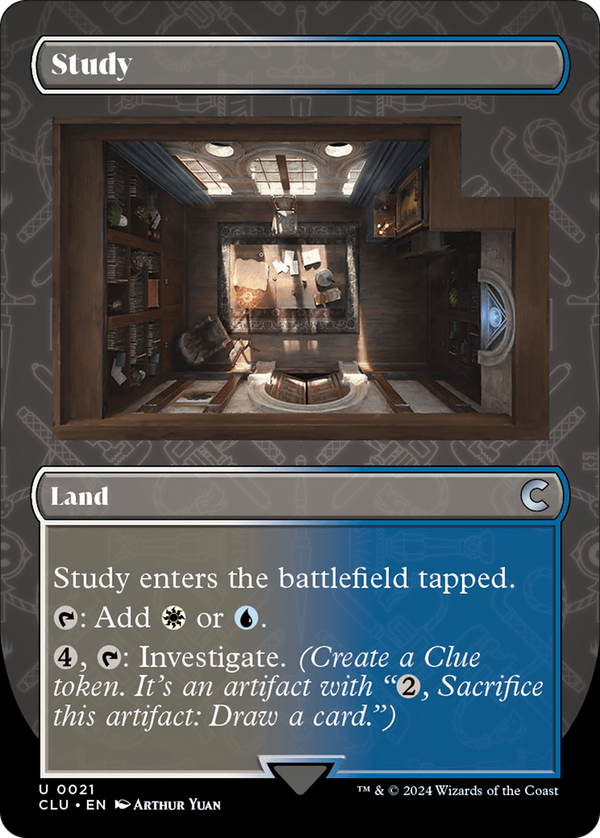
Rules text
 : Add
: Add  or
or  .
.
 , : Investigate. (Create a Clue token. It's an artifact with "
 , Sacrifice this token: Draw a card.")