Stomping Slabs


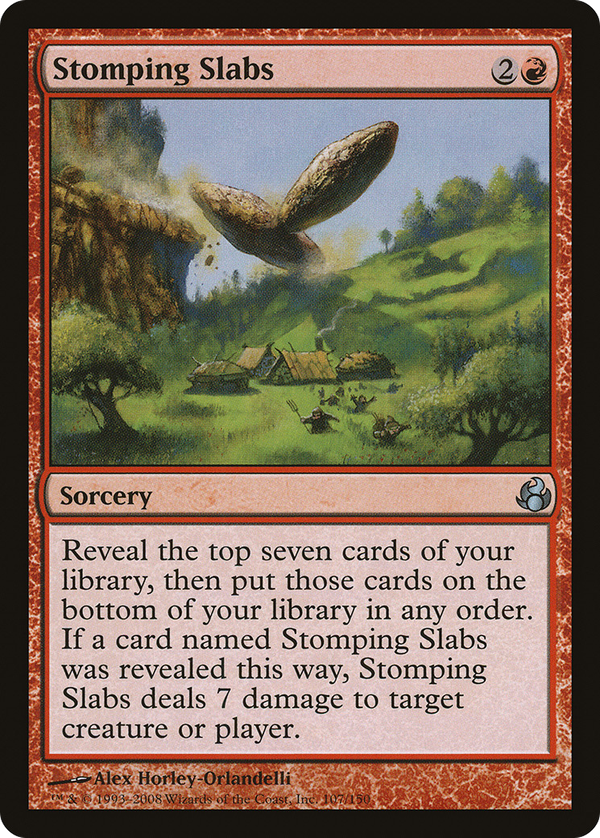
The joke is the build-around. To deal seven damage, you have to reveal a copy of itself among the top seven cards of your library, which means the spell is functionally inert unless you run multiples and accept that even four copies in sixty cards leaves the trigger as a coin flip most of the time. Everything else it does is consolation: a poor man's scry seven that doesn't even let you keep what you find, just bury it. This is design as gambling apparatus, one of an oddball cycle of common gambits that each reveal the top seven and pay off only if a same-named card turns up. The payoff is deliberately oversized (seven damage to anything is a kill spell and then some) precisely because the reveal is so unreliable; the card is balanced not by a restriction on the effect but by the improbability of triggering it at all. It draws on a self-referential gimmick where a card's own name is part of its rules text, turning deckbuilding into stacking the odds rather than assembling a combo. The right number of copies is a probability exercise, not a synergy one, and that is the whole pitch: a burn spell that gambles on your own library rather than your opponent's life total.