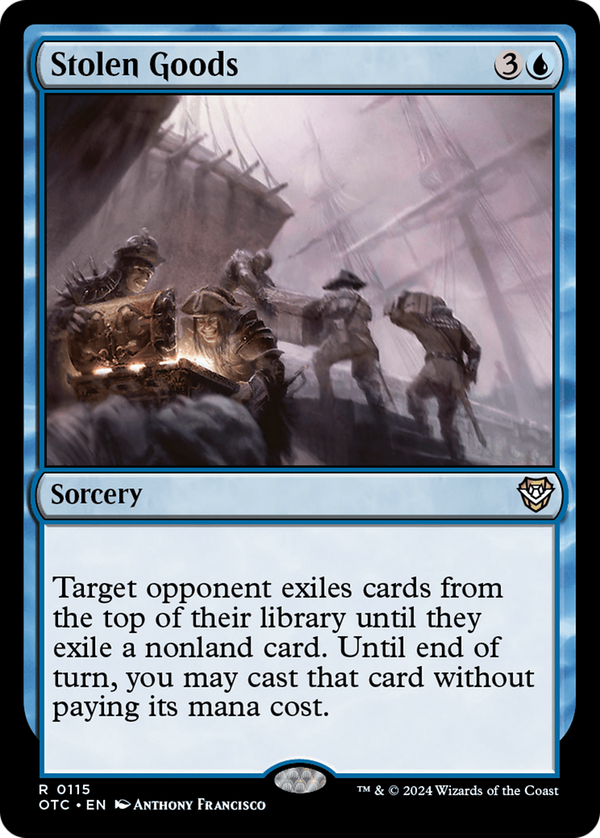
Stolen Goods


Casting a spell out of someone else's library is a gamble whose floor is set by their deck, not yours. The dig burns through lands until it exiles the first nonland card, and it waives that card's mana cost, so the lure is obvious: an expensive bomb arrives free. But the price is control. This is a window into the opponent's library, not a tutor for your own, and everything after the exile depends on what they run and whether you can actually cast it. Additional costs still apply. Casting requirements the card names must still be met. A creature-heavy opponent might hand you a finisher; a control deck might surface a counterspell with nothing legal to point at, or a card you simply cannot pay for, and then the theft is a whiff. An opponent with no nonland cards to find gives you nothing at all. The sorcery-speed clause sits on the theft itself, not on the loot: you can only cast it on your own turn, but if you catch an instant, you may hold it and fire it at instant speed later that turn, keeping a thread of reactive play alive inside an otherwise proactive bet. It belongs to a small line of blue effects that mine the opposing library for value, where the appeal was never the median outcome but the occasional capture of a card you could never have drawn yourself, and could never have afforded if you had.