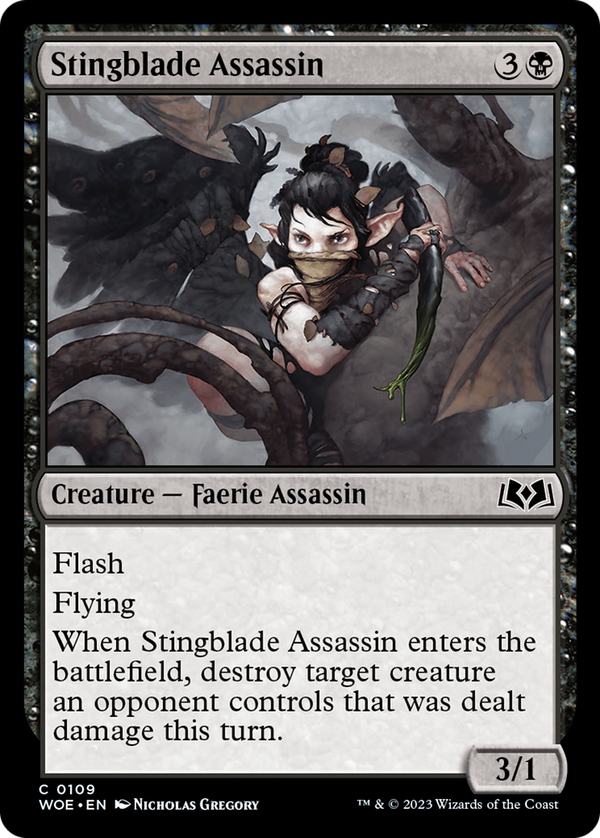
Stingblade Assassin


The conditional on the removal is the whole design problem. Destruction only fires against a creature an opponent controls that was already dealt damage this turn, which makes this a payoff for a combat exchange or burn effect you have already committed to rather than an answer you cast into an empty board. The timing wrinkle matters: because the enters-the-battlefield trigger goes on the stack and resolves later, you are not flashing this in as a blocker and cashing in the same combat's damage. You cast it after damage has been dealt, once an attacker is bloodied by your blockers, or after a ping, a fight spell, or a bite effect has left the target wounded. That framing rewards decks that can draw first blood on their own terms: a chump block that survived a turn, a one-toughness pinger, anything that softens a creature before the assassin arrives to finish it. Where an unconditional kill spell answers anything at any time, this answers only what has already been engaged, and the 3/1 body is fragile enough that trading it away is often the plan rather than a cost. It is an assassin's flavor pushed cleanly into mechanics: the card does not hunt on its own, it capitalizes on a wound someone else opened.