Steely Resolve


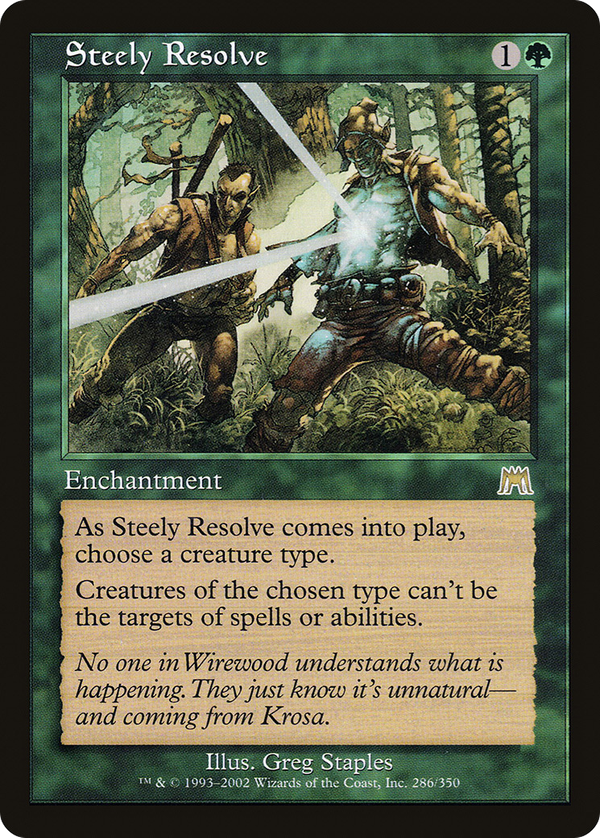
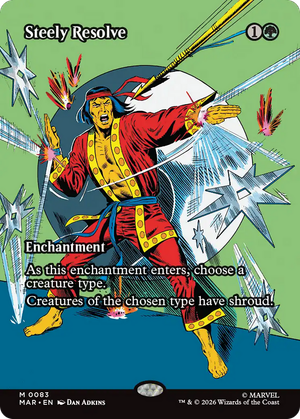
Granting shroud to your own creatures is a defensive move dressed up as a tribal payoff: the named type can no longer be targeted, which means your own auras, equipment, and pump spells stop landing on them too. That bidirectional cost is exactly why a two-mana board lockout can sit at rare without warping anything. It reads as a toy for one of the era's many creature-type matrices, but its real use is asymmetric protection for a board you have already assembled and no longer need to target. Once a Goblin or Elf army is online, locking it out of targeted removal, Pacifism-style auras, and most spot interaction is pure upside. The catch is that you choose the type as the enchantment enters, so the call is fixed the moment it resolves; you cannot redirect it when the opponent switches threats. Note what shroud does not cover: it stops targeting only, so edicts that force a sacrifice (which target the player, not the creature) cut straight through, as do board wipes and any effect that does not single out a creature. It also names a creature type rather than a controller, so a mirror where both players field the same tribe hands the protection to the table at large. Shroud reads worse than hexproof here precisely because it points both ways, and that symmetry keeps the lockout fair: it rewards a creature plan that has stopped wanting targeted help of its own.