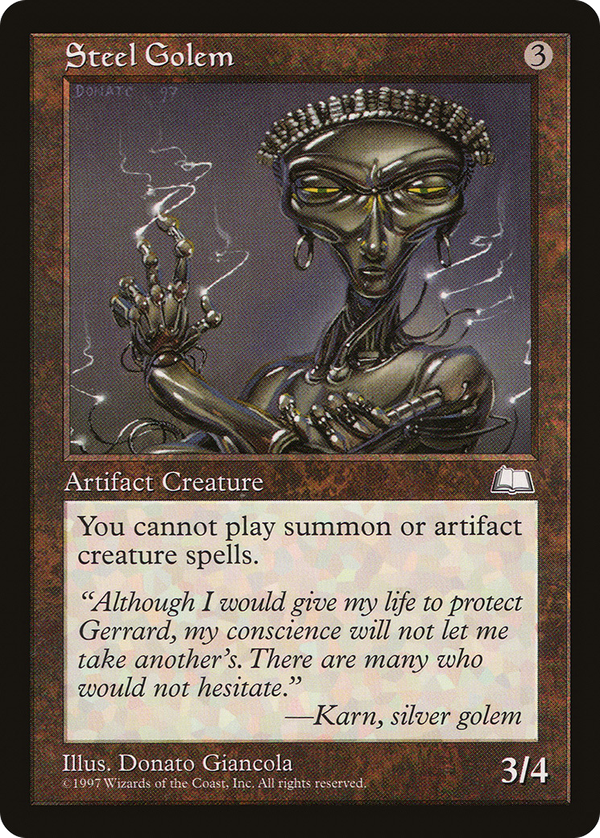
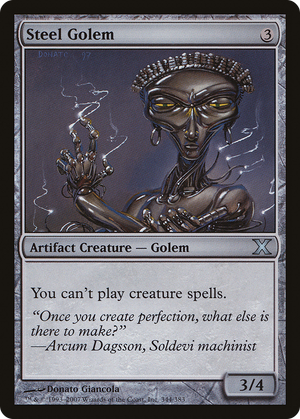
Steel Golem

A 3/4 for three was a real rate in the era that produced it, which is the joke: the body almost dares you to find a way around a sentence so total it reads like a punchline. The drawback is not a tax or a trigger but a categorical lockout. As long as the Golem is yours, every creature in your hand is a dead card. This is downside design from the period before Wizards learned to make restrictions situational or escapable; the card simply hands you a premium beater in exchange for shutting off an entire spell type. The wrinkle is structural rather than strategic. The restriction is one-sided, applying only to its controller and only for as long as the Golem survives, which means the puzzle the card poses is one of disposal: it wants to be sacrificed, bounced, or otherwise sent away before you start rebuilding a board. The Golem is best read as a temporary asset you intend to liquidate, fodder dressed up as a beater. Most prohibitive drawbacks ask you to build around the restriction; this one asks you to plan its own removal from your side of the table, which is a stranger and more specific design space. It belongs to the school of design that believed a clean body and a brutal sentence could share a card, and that the player would do the math.