Squash


The whole card is the discount clause. Six damage aimed at a creature or planeswalker for five mana is a rate nobody builds around; the same six damage for two mana, provided you already control a Giant, is a burn spell that clears blockers and taxes planeswalkers at a price that competes with anything red gets. That conditional is the payoff structure of an entire tribal identity: the Giants deck wants beefy, expensive threats on the battlefield, and this rewards the commitment you have already made instead of demanding a separate removal package. It reads like an instant with a discount stapled on, but the design intent runs the other way. The discount is the card, and the full-price removal is the fallback for games where your board has stalled and no Giant has arrived. The unconditional cost exists mostly so the spell is never a dead draw, a floor that keeps a tribal payoff from turning into a liability when the tribe fails to show up. What separates this from cost-reducers that shave a mana here or there is the sheer size of the cut: three generic mana is most of the price, so the presence or absence of a single Giant swings this between a card you would never cast and one of the more efficient answers in the color.
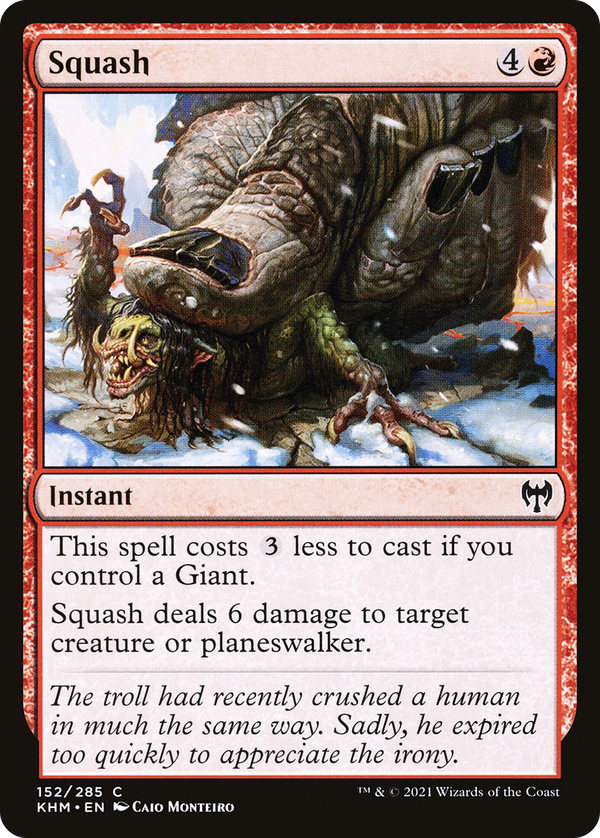
Rules text
 less to cast if you control a Giant.
Squash deals 6 damage to target creature or planeswalker.
less to cast if you control a Giant.
Squash deals 6 damage to target creature or planeswalker.