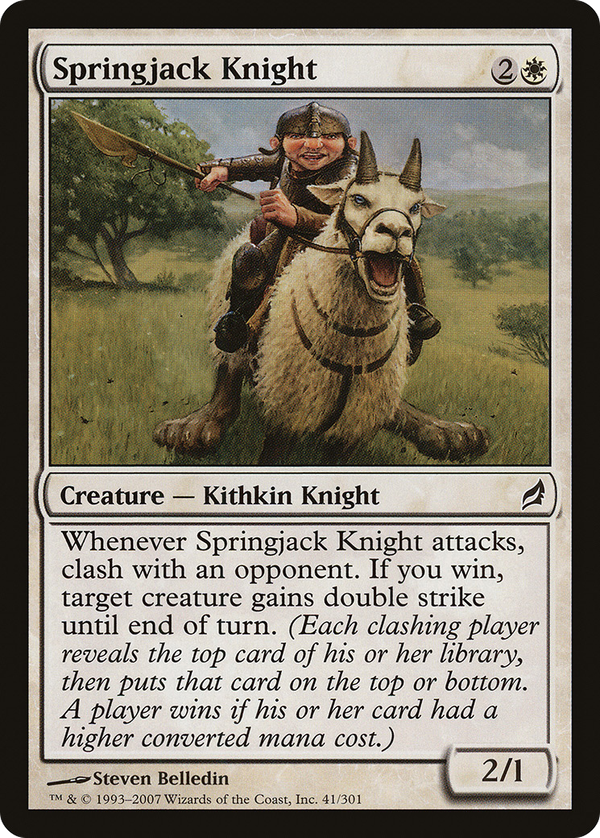
Springjack Knight


The genuinely thoughtful piece of this design is where the reward points: winning the clash grants double strike to a target creature, not just to this Knight, so a fragile Kithkin body becomes the ignition for a damage spike anywhere on the board. That flexibility is the high note. The low note is structural to the comparison the ability leans on. Winning a clash means revealing a card of greater mana value than your opponent's, and while you choose whether your revealed card sits on top or sinks below, you can nudge the next draw but never rig the contest itself. A curve built on cheap aggressive spells simply cannot reliably outweigh a midrange opponent's draws. So the deck most interested in an attacking white three-drop is exactly the deck worst equipped to win the mana value check that powers it. That is the central tension of clash as a mechanic: an aggressive plan undercutting the very ability meant to reward attacking, with the payoff gated behind an unreliable comparison every combat. When the double strike lands it is splashy and can point wherever you need it, but the trigger never escapes the gravity of a contest that fast white decks were built to lose.