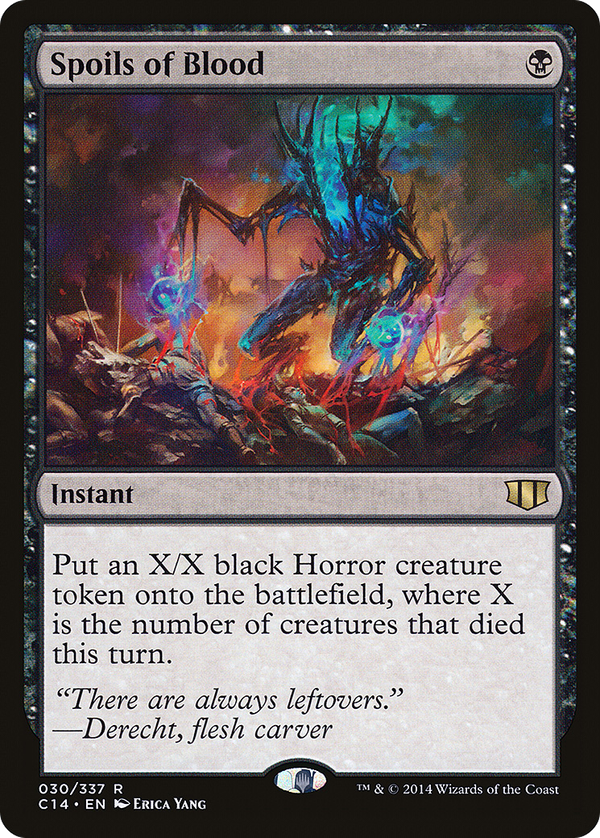
Spoils of Blood

The token's size is a ledger of carnage, and that single design choice is what makes this a payoff rather than a spell. Most token-makers print a fixed number on the card; this one defers the math to the board state, reading the turn's death count as it resolves. The implication is that it does nothing the turn you do nothing: with no creatures dead, it hands you a 0/0 that immediately falls off, so it is functionally a blank until the bodies start dropping. That conditionality is the whole bargain. In exchange for being dead-on-arrival in a vacuum, it gets to be a one-mana instant that can resolve into a genuinely large threat, and the instant-speed window is doing real work. Wait for a board wipe to fully resolve, then cast it with the graveyard freshly stocked and the death count at its peak: you rebuild on the same turn the wrath was supposed to leave you empty. Cast it after a multiblock combat, or in the second main following a sacrifice-engine turn, and the count climbs without you spending extra cards to inflate it. The one thing the spell cannot do is anticipate the dying; it counts only what has already happened, so the sequencing is strict. It is a sacrifice deck's contingency answer and a wrath deck's recoupment in the same line of text, asking only that you fire it after the bodies have hit the yard rather than before.