Spirit Water Revival


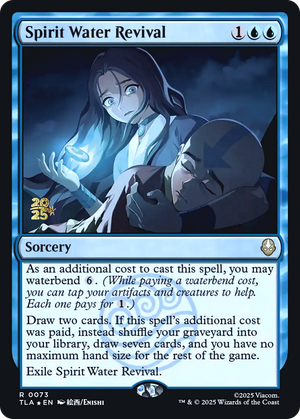
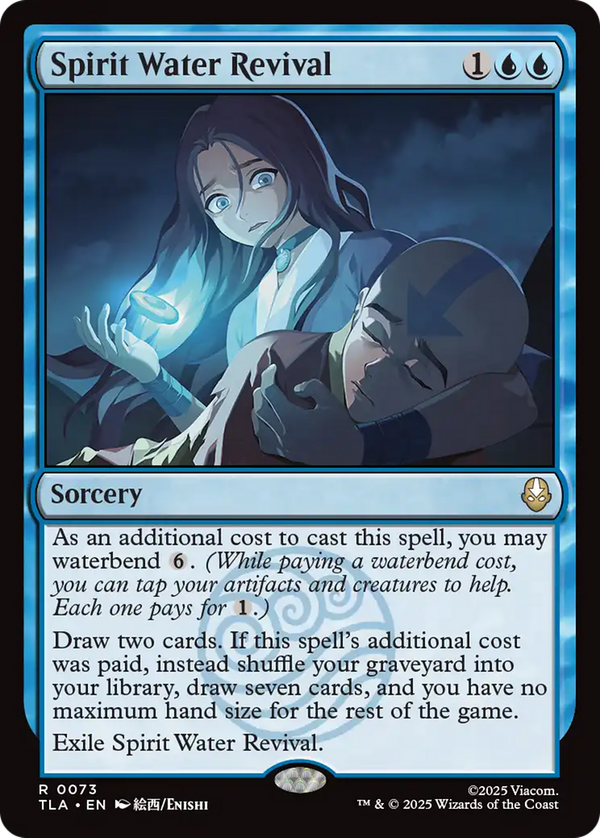
The waterbend cost is the real puzzle here, and its trick is where the six generic actually comes from. You can pay it with mana like any additional cost, but the card invites a second option: tap your artifacts and creatures, each one covering a single pip, so a developed board can shoulder some or all of the surcharge without spending a land. That reframes the price entirely. A player who has committed permanents to the table converts that investment into the full effect; a player who has not simply skips the cost and takes the smaller draw. Unpaid, this digs two cards deep and exiles itself, a self-limiting refill for the early game. Paid, it becomes a genuine reload: the graveyard shuffles back into the library, seven fresh cards arrive, and the maximum-hand-size ceiling comes off for the rest of the game. That last line carries more weight than it reads. Drawing seven means little if the cleanup step discards five of them, so lifting the cap is what turns a momentary spike into cards you actually keep. The recurring problem with deck-emptying blue draw is how to price it without hiding the cost behind a mana number nobody reaches; letting the battlefield help foot the bill answers that, rewarding decks already flush with permanents. The exile rider closes the loop. One refill from this well, then it is spent for good.
Rules text
 . (While paying a waterbend cost, you can tap your artifacts and creatures to help. Each one pays for .)
Draw two cards. If this spell's additional cost was paid, instead shuffle your graveyard into your library, draw seven cards, and you have no maximum hand size for the rest of the game.
Exile Spirit Water Revival.
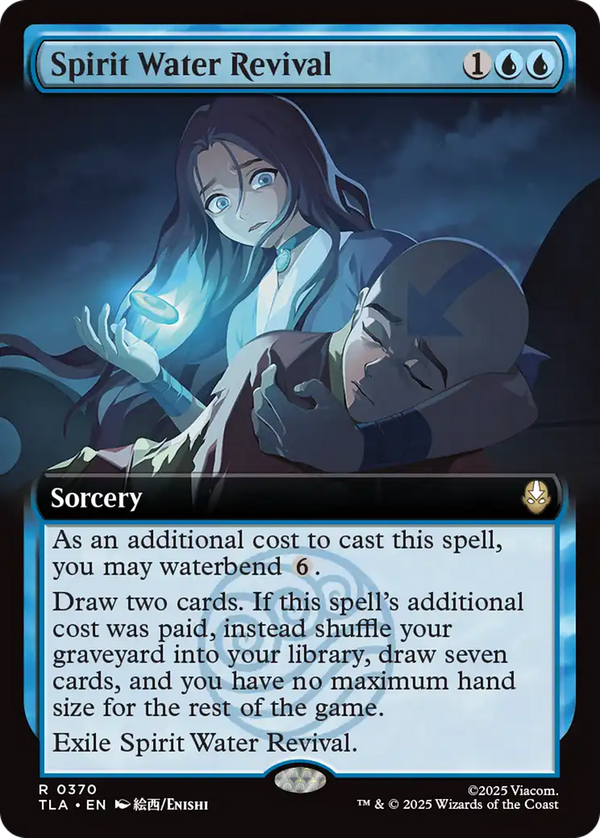
. (While paying a waterbend cost, you can tap your artifacts and creatures to help. Each one pays for .)
Draw two cards. If this spell's additional cost was paid, instead shuffle your graveyard into your library, draw seven cards, and you have no maximum hand size for the rest of the game.
Exile Spirit Water Revival.