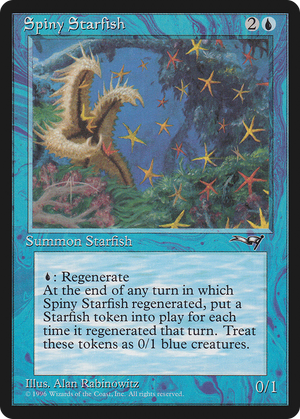
Spiny Starfish


Regeneration as an engine rather than insurance, with a back-loaded payoff that the naive reading misses: the tokens only arrive when the shield is actually spent stopping destruction, not when it is raised speculatively. Most regeneration is pure waste if the threat never comes, a mana cost paid for a shield that goes unused. Here the end-step trigger fires only when a destroy effect or lethal combat damage gets prevented during the turn, and it counts each separate regeneration. The catch is that a single combat does not feed you a battalion: blockers take damage simultaneously, so a lethal block is one destruction event burning one shield, and regenerating pulls the creature out of combat entirely, so it cannot soak up further damage that phase. The value lives in repeated answers across multiple turns or multiple removal spells, not in absorbing a wide swing in one step. The body does nothing on offense and the engine sits idle on a clear board, which makes the open-ended mana sink the whole proposition: an opponent who keeps pointing kill spells, or who attacks into it turn after turn, is the one slowly minting your 0/1 Starfish. As an early blue attempt to make a defensive ability generate material instead of merely preserving it, the design reads as a thought experiment in turning regeneration's downside into a win condition, decades before token engines became a routine reward structure.
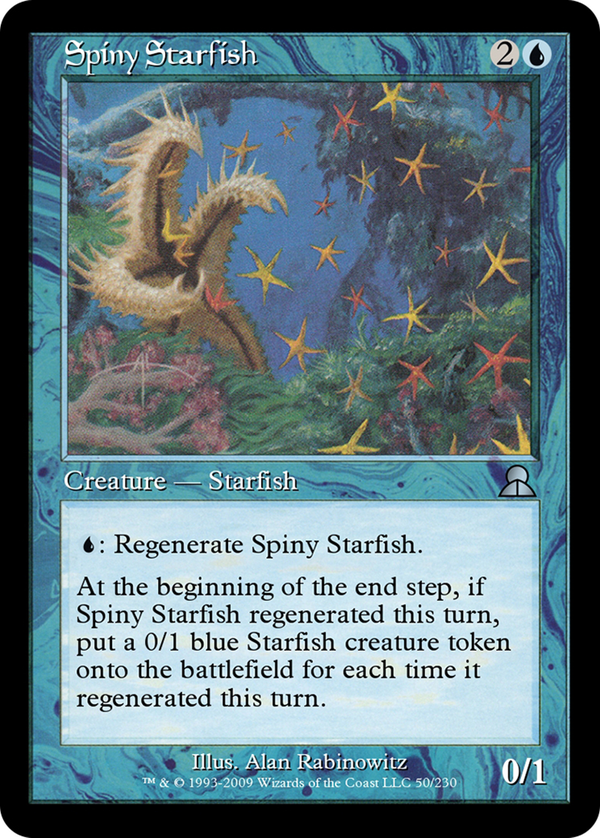
Rules text
: Regenerate this creature.
At the beginning of each end step, if this creature regenerated this turn, create a 0/1 blue Starfish creature token for each time it regenerated this turn.