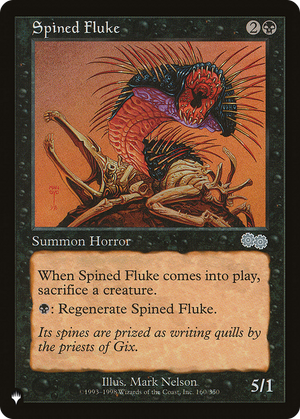
Spined Fluke


Five power for three mana on a regenerating body: that rate arrives with a bill attached, and the enters-the-battlefield sacrifice is how it gets paid. The creature you give up is what keeps the math honest, and it aims the card squarely at decks already manufacturing fodder. Sacrifice a spare token, a depleted creature, or something you wanted dead anyway, and the downside evaporates; cast it into an empty board and you are eating your own best threat. The regeneration shield turns the survivor into a genuine nuisance, a beater that survives combat and most targeted removal as long as black mana keeps flowing, which is why the one-toughness body matters less than the sticker price suggests. What the card really wants is to be the second half of a value transaction: the creature it kills should have already paid you, whether through a death trigger, a recursion loop, or simply having attacked once. Read that way, the sacrifice is not a tax but a delivery mechanism, a way to launder a creature you were done with into a regenerating five-power threat. The unusual Worm Horror typing and the era's penchant for steep tradeoffs mark it as a product of a design sensibility that priced aggression in body counts rather than card disadvantage, and asked players to find the creature they could most afford to lose.
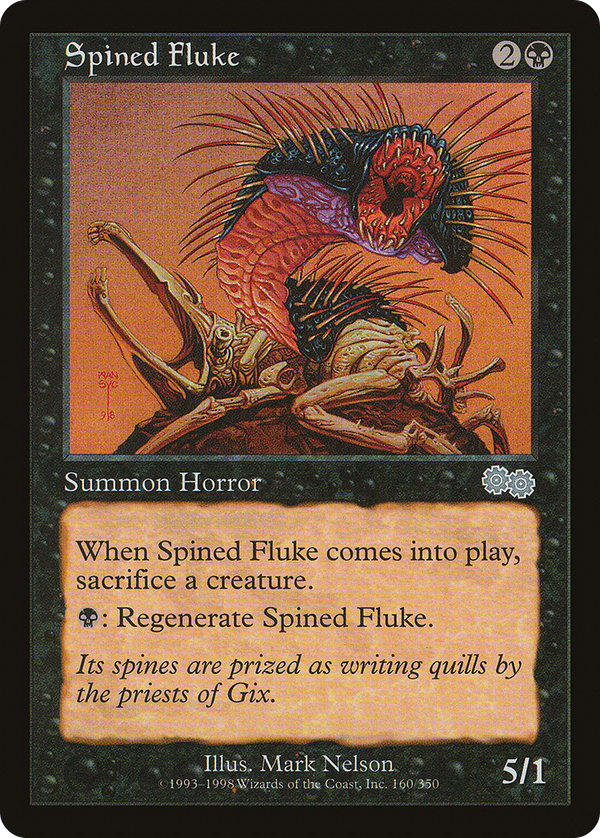
Rules text
: Regenerate this creature.