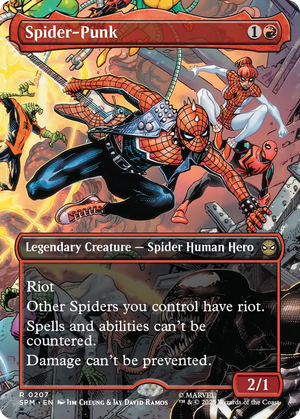
Spider-Punk


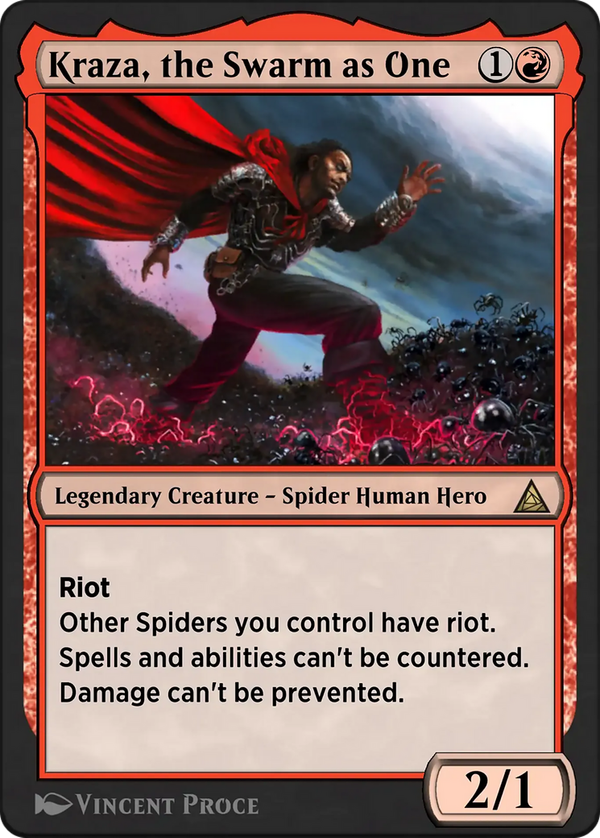
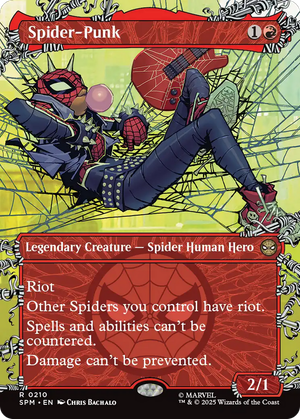
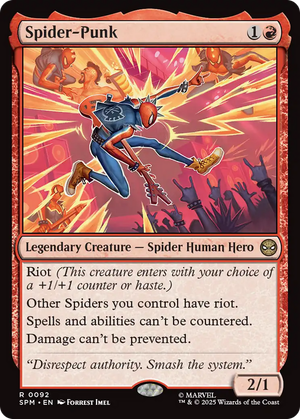
Riot on a two-drop is old hat: a small body that arrives either bigger or faster, its controller's call at the moment it enters. What turns that keyword into a deck is the next line, handing the same choice to every other Spider you control and giving a creature type that rarely gets aggressive support a repeatable curve-out engine. Then come the two static clauses that lock the door behind the swing. Spells and abilities can't be countered takes away the control player's cheapest answer to a fast start, and damage can't be prevented switches off the fog-and-fend defenses that aggressive decks otherwise have to plan around. Neither clause protects this creature specifically; both rewrite the terms for the whole team. The result reads less like a single threat and more like a mandate: take the counter or the haste, then attack without asking permission and without the usual outs. It is a punk-rock thesis rendered in rules text, flavor and function pointing the same direction, and it lands where the aggression is meant to hit first: the bottom of the curve.