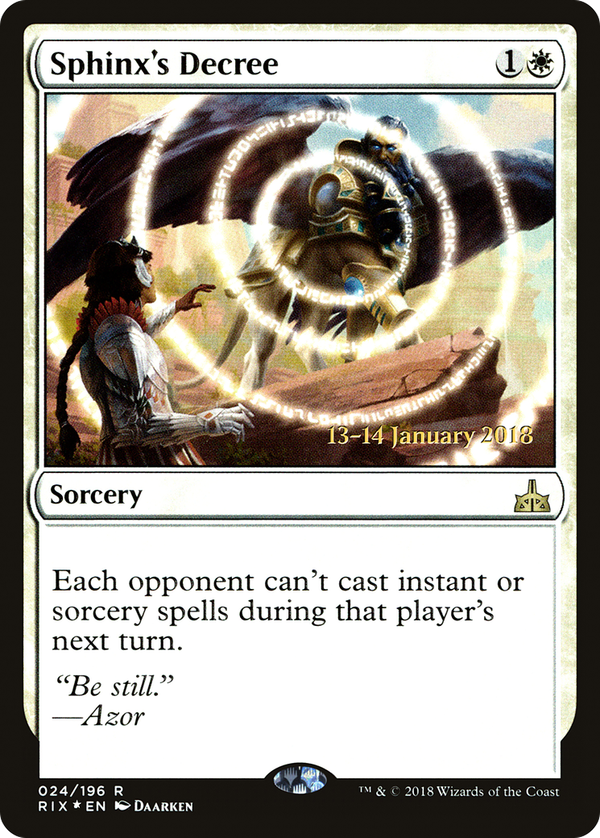
Sphinx's Decree


The key to reading this correctly is the timing: it silences an opponent's instants and sorceries during their next turn, not during yours. That reverses the usual instinct about what this protects. Silence and its cousins clear the reactive half of an opponent's deck out of your turn, so you can push a decisive play through open mana. This does the opposite: it looks forward to the opponent's turn and takes their reactive spells off the table then. What that buys is not permission-proofing for your own combo turn but a suppression of the answers they would otherwise cast on their own clock: the sweeper, the removal spell, the burn to your face, the bounce that resets your board. You are muting their turn, not shielding yours. Because it is a sorcery, it lives on your main phase, which means you are always spending it a beat ahead, betting on what they will want to do next rather than reacting to what they are doing now. The restriction that keeps it fair is how much it leaves alone: creatures, planeswalkers, artifacts, and enchantments all still resolve, so the opponent can still develop a board and deploy threats. It touches only the stack-based half of their game, and only for one turn. That narrow window makes it a setup piece for a proactive white plan looking to strip an opponent's interaction at the exact moment they most want to use it.