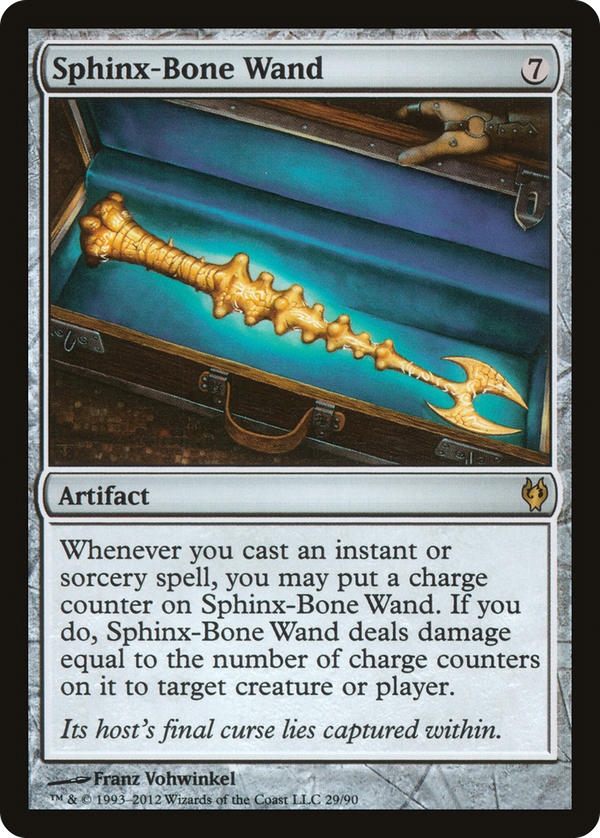
Sphinx-Bone Wand

The arithmetic here is quadratic disguised as harmless. The first spell that triggers it after it resolves earns one counter and one point of damage, a laughable return on a seven-mana commitment. The second deals two, the third three, and the running total climbs as triangular numbers: 1, 3, 6, 10, 15. By the time a dedicated spellslinging deck has churned through half a dozen cantrips and burn spells, the wand is throwing lethal figures at any target on the table, and the trigger costs nothing beyond the spells the deck was already going to throw. Because the counters never leave, the engine compounds across every turn it survives. That structure is what marks it: most artifact-based damage outlets of its era asked you to tap and pay per shot, but this one converts the normal game plan (cheap spells you intended to cast anyway) into an accelerating damage source whose only ceiling is how many you can string together before the game ends one way or the other. The catch is the front-loaded cost and the slow ramp: a board already losing will not be rescued by a wand that needs three or four casts to matter, and an opponent who answers it before the counters stack pays almost nothing to do so. It rewards a shell built to flood the early turns with cheap interaction and selection, where the wand stops being a finisher you draw and becomes the inevitable end of a plan you were running regardless.