Soul Ransom



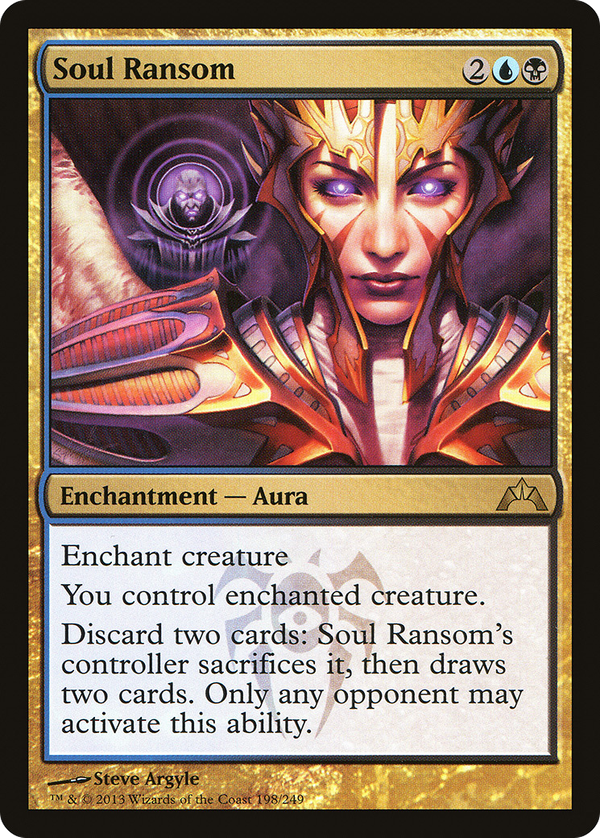
Theft auras have a recurring flatness problem: once you take a creature, the opponent has no recourse, and a static "you control it" reads like removal that happens to refund the body if the Aura ever dies. This design answers that by building the counterplay into the card itself, in the form of a ransom button the opposing side alone can press. The clause limiting the ability to your opponents is doing real rules work, not decoration: by default only a permanent's controller can activate its abilities, so without that line the ability would sit with you, the thief, and never function as a buyback at all. It is the mechanism that hands the dispossessed player (or any opponent willing to spend for them) a route to the creature, at the price of two cards discarded, while you sacrifice the Aura but draw two in return. The symmetry is the clever part. Neither side is purely punished: you lose the body but gain the cards, the opponent regains the body but spends the hand, and the open question is simply who values that creature more in the moment. That turns the steal from a verdict into a wager. An opponent flush with gas might gladly pay to reclaim a key threat; one already low on cards has to weigh whether the body is worth emptying further. Most Auras leave their answer entirely to enchantment removal. This one negotiates its own terms.