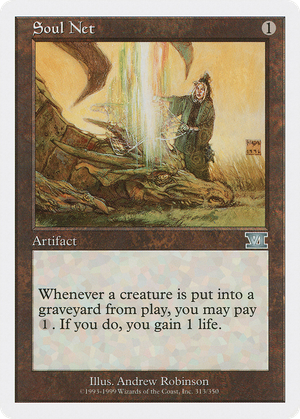
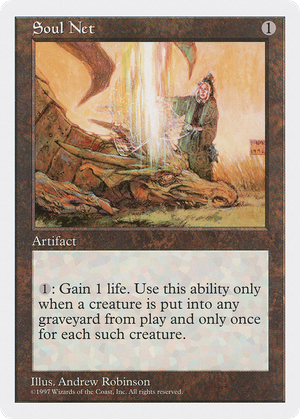
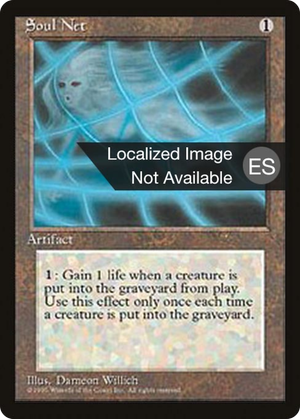
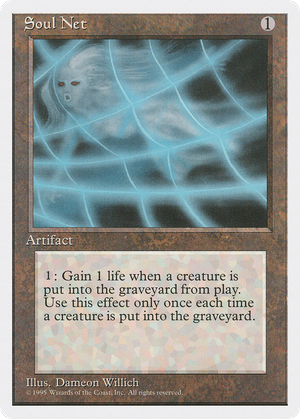
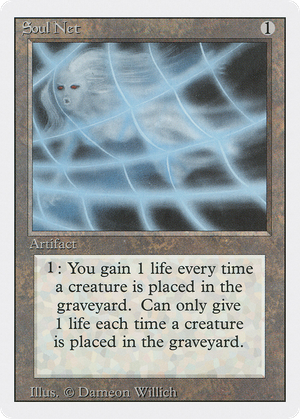
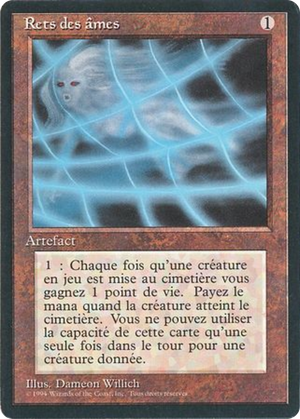
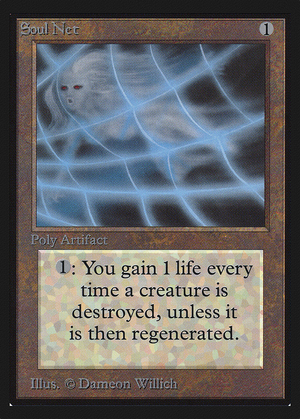
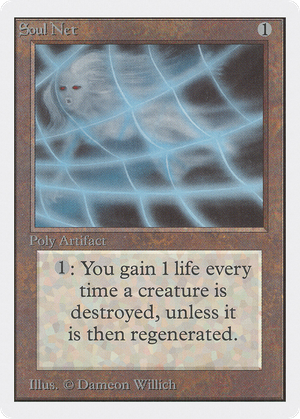
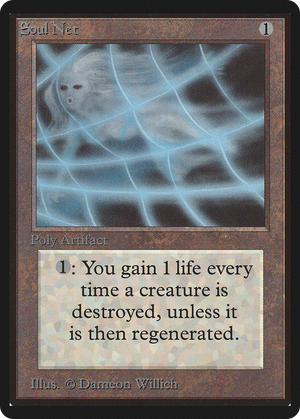
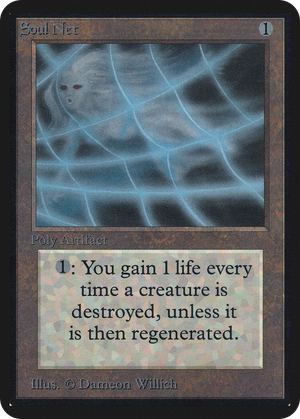
Soul Net

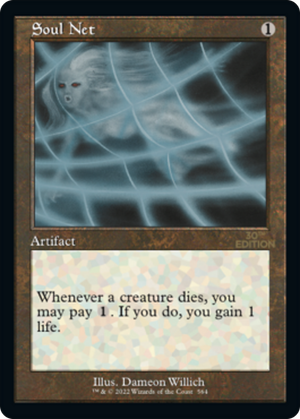
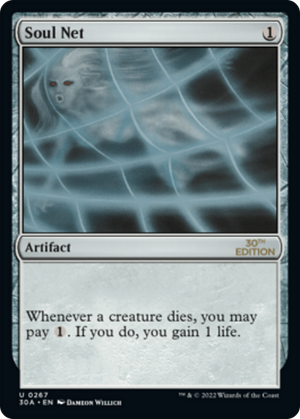
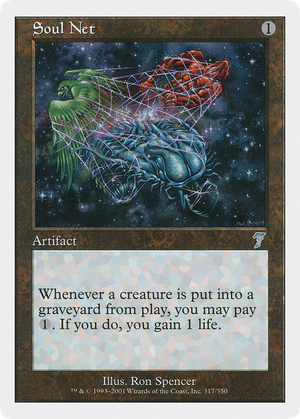
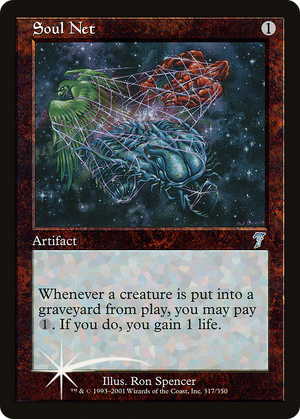
A first-pass at a design problem Magic has revisited dozens of times since: converting creature deaths into incremental life without making the conversion free. The early answer was the optional pay-one-to-gain-one trigger, a rate that reads as almost comically poor by modern standards but encodes the design discipline plainly. The mana tax exists so the card cannot snowball: every life point costs a mana, which means a board sweep cannot stabilize you for free, and a sacrifice-outlet deck cannot loop the trigger into an arbitrarily large life total. The "may" clause is the other half, letting the controller decline triggers when the mana matters more than the point. Later cards in this lineage relaxed both restrictions in stages: the no-cost death-trigger drains of Blood Artist and Falkenrath Noble that bleed the opponent rather than asking for payment, the wider board-wide triggers of Zulaport Cutthroat, the scaling payoffs of Cruel Celebrant. Each loosening is legible against this baseline. Read it as the prototype that established what the death-trigger life-gain slot looks like when the designer is being maximally cautious: a cheap artifact, an optional triggered ability, and a rate deliberately set below the curve so the card asks to be built around rather than splashed.
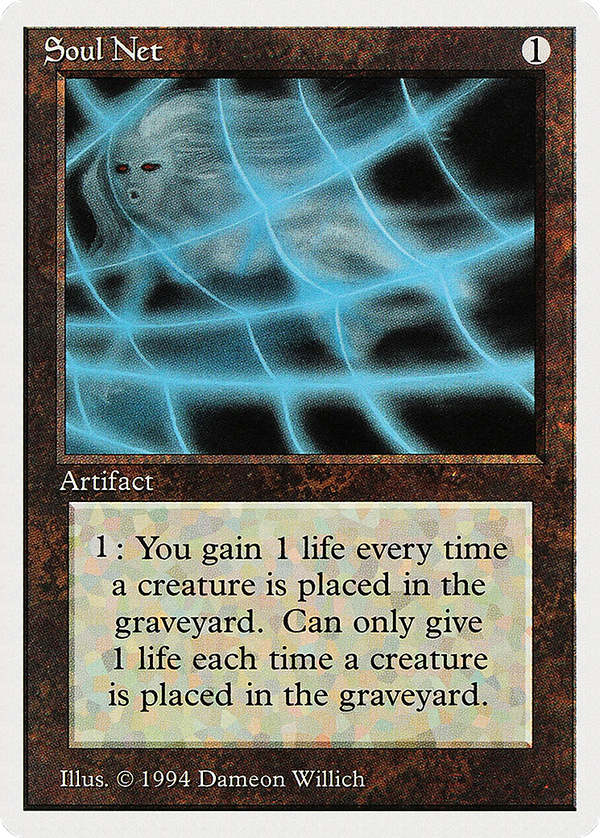
Rules text
. If you do, you gain 1 life.