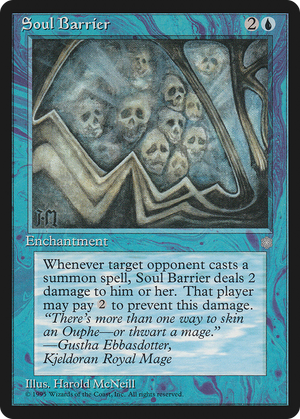
Soul Barrier


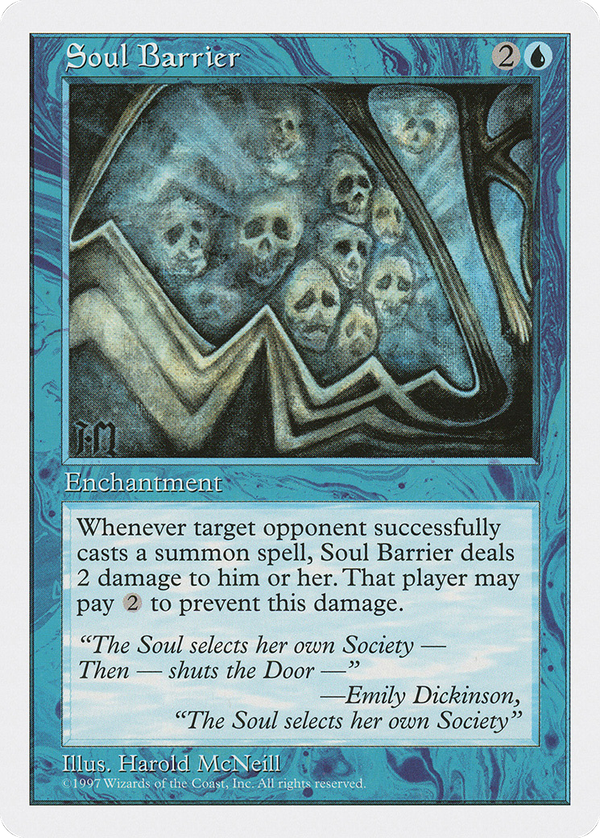
A tax that pretends to be a deterrent. The design idea is friction without prohibition: every creature an opponent plays still resolves, but unless they pay , the enchantment deals them 2 damage. That decision is the entire engine. Against a deck flooding the board with cheap creatures, the surcharge stacks into a real tempo drag, two mana siphoned off each development turn or a pile of damage accruing into burn range; against one big threat, the opponent shrugs and eats the 2 or pays once. It punishes width, not height, which makes it a strangely targeted answer for a card with no targeting at all.
The choice to deal damage rather than drain life is the era's fingerprint. This comes from a time when blue was allowed a little incidental burn as the cost of a soft tax, paying for the privilege of slowing creatures down rather than countering them outright, before the color's identity tightened around bounce and counters. That it deals damage also matters in practice: it can be prevented, redirected, or shrugged off by a player at a comfortable total. Read today, it scans less as a playable answer than as a window into how that age imagined a control deck taxing an opponent's development: a slow squeeze that asks a question every turn and accepts the opponent will usually answer it.
Rules text
.