Song of Blood


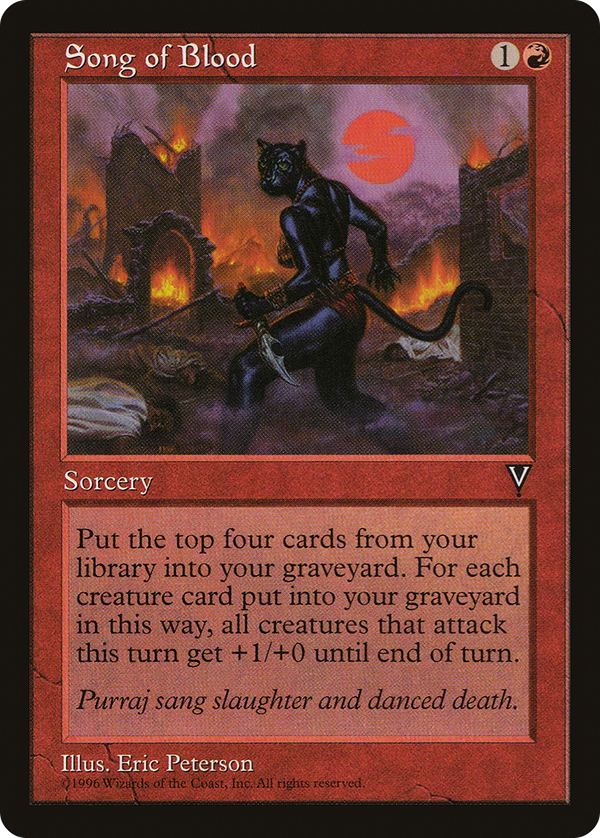
A combo of self-mill and combat pump that almost no one was building toward in 1997, leaving it a curiosity rather than a staple. The design knot is that the payoff is yoked entirely to the randomness of what the top four cards happen to be: hit four creatures and every attacker swings for an extra four, hit four lands and the whole spell evaporates into a sorcery-speed dig that cost you a card and two mana. There is no smoothing mechanism, no scry, no choice in what gets binned, so the variance is the cost the +1/+0 is paid in. The pump also covers your whole team rather than a single creature, and it applies to anything attacking that turn, which quietly rewards a board already committed to the red zone over a single fat threat. What undercuts it is timing: this is a sorcery, so you resolve it before combat, and the mill itself reveals exactly how much pump you are getting before any attacks declare, with no way to hold the gamble as a surprise. The card is one of the game's earliest attempts to tie graveyard-filling to an aggressive payoff, the kind of effect later sets would learn to make deterministic with delve, surveil, and sacrifice-your-own-creatures designs. Here the mill is pure gamble, and the spell lives or dies on what the library hands you.