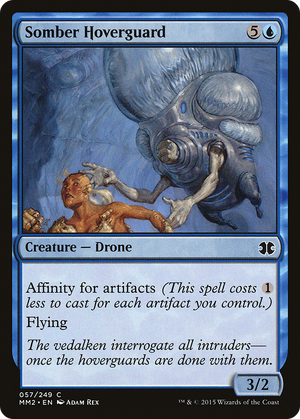
Somber Hoverguard


Affinity's job was to turn an artifact count into a discount, and this card shows what the mechanic was actually paying for: not raw power, but evasion at a price the board sets for you. The printed cost reads as expensive, and a 3/2 flier is unremarkable on its own, but in a deck flooded with cheap artifacts the discount strips that cost down until the body arrives well ahead of curve. That is affinity working as intended: the card taxes your own commitment, rewarding a board you have already built and punishing you when you have not. What separates this from the affinity payoffs that drew bans is the modesty of the result. A discounted Thoughtcast or a free Frogmite can warp a game; a discounted 3/2 with flying just hands an artifact deck a clock that can close over a stalled ground. That restraint is why it survived the format's reckoning while the flashier affinity cards did not. It converts deck density into tempo (which is what the mechanic was supposed to do) without doing more than the era could bear, making it a clean record of what a healthy affinity payoff looked like before the archetype's excesses overshadowed it.
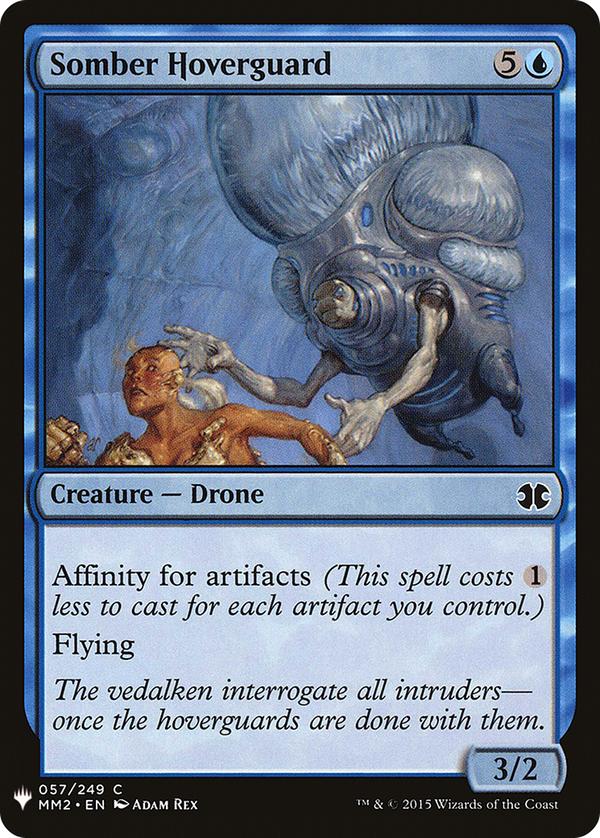
Rules text
 less to cast for each artifact you control.)
Flying
less to cast for each artifact you control.)
Flying