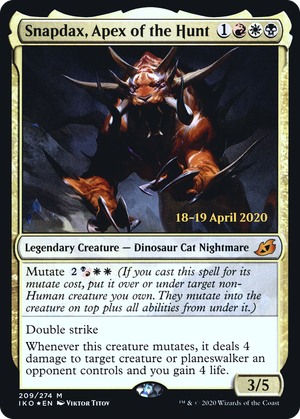
Snapdax, Apex of the Hunt




Mutate handed a cycle of apex predators a triggered payoff at the instant two creatures merged, and this Mardu member is the one whose trigger swings both halves of a race at once: four damage to an opposing creature or planeswalker, four life back, every time the pile grows. That symmetry is the whole reason to pay the mutate cost again rather than once. Because mutating stacks a new spell over (or under) an existing creature instead of casting a fresh body, each successive cast fires the same drain on the same escalating stack, and double strike sticks to the merged creature no matter which card sits on top: mutate preserves the abilities of everything underneath, so the ability survives being buried. What emerges is a clock that races its own life swing, a burn-and-drain effect welded to a growing attacker. The incremental payoff is deliberately modest under a 3/5 (4/4 worth of tempo per mutation), but repeatable enough that a chain of cheap merges reads like a spell you keep recasting on a body that never resets. Mutate is a go-tall mechanic by nature, folding several cards into one towering threat, and an aggressive three-color build wants precisely that: one overwhelming attacker that ends games while stapling its value to combat math rather than parking it in the abstract. The on-mutate trigger is what makes each restack worth the tempo, punishing the opponent's board while the pile climbs.
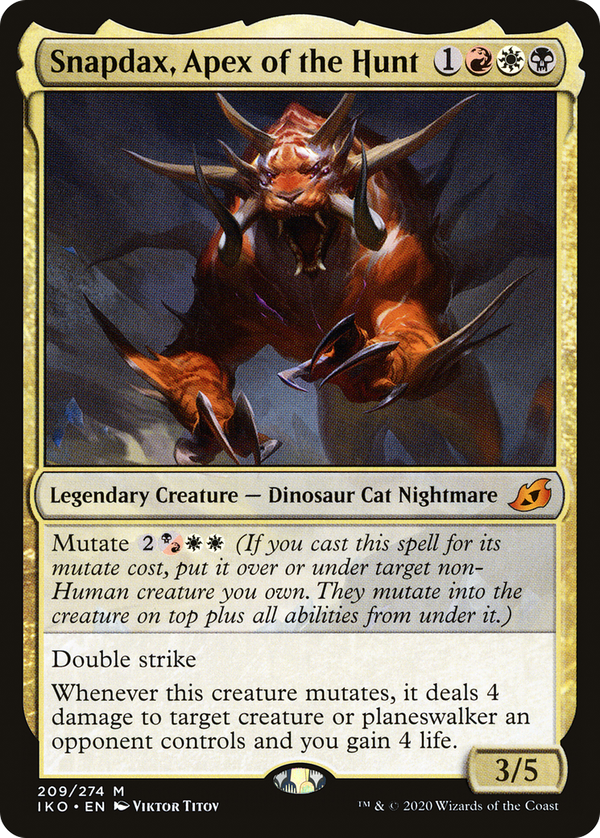
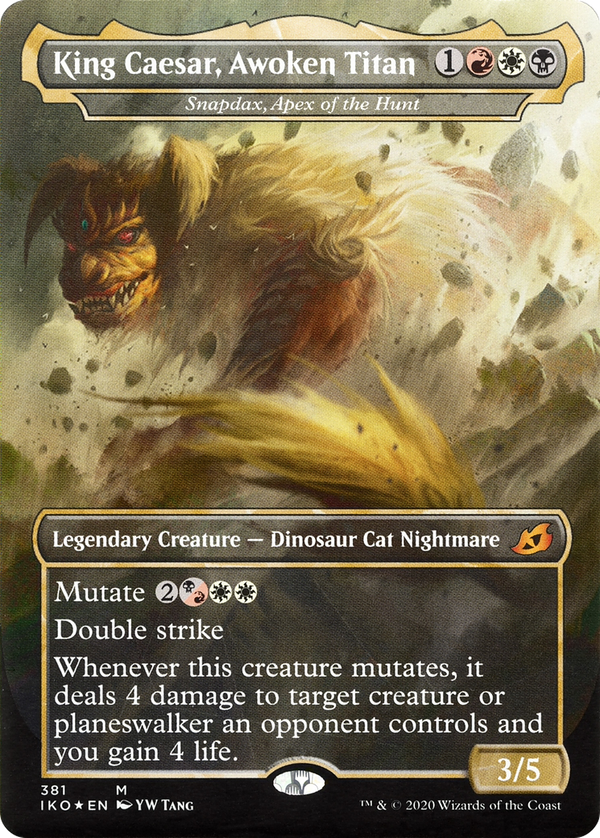
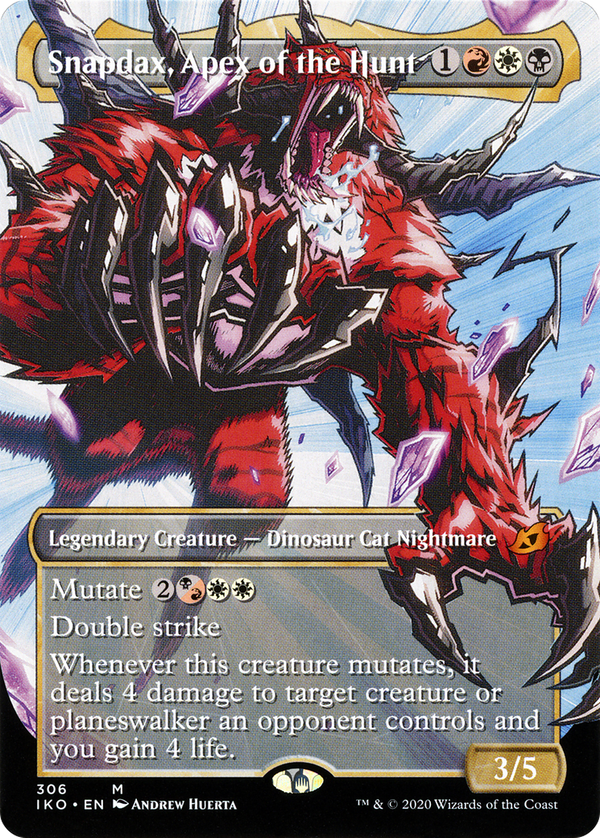
Rules text

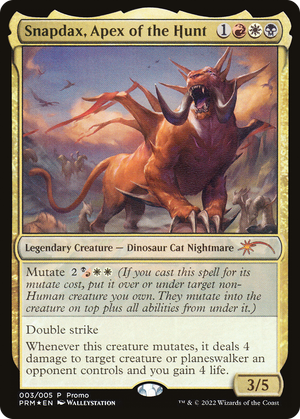
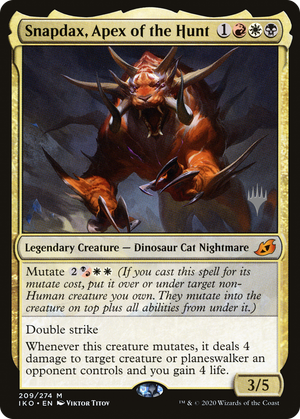
 (If you cast this spell for its mutate cost, put it over or under target non-Human creature you own. They mutate into the creature on top plus all abilities from under it.)
Double strike
Whenever this creature mutates, it deals 4 damage to target creature or planeswalker an opponent controls and you gain 4 life.
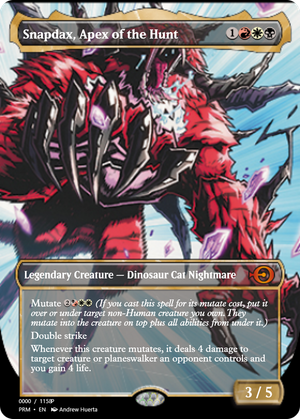
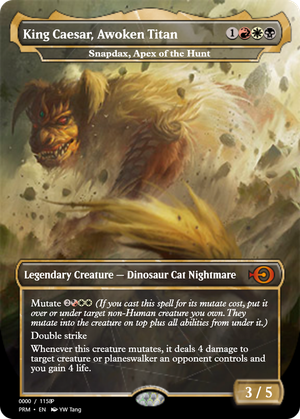
(If you cast this spell for its mutate cost, put it over or under target non-Human creature you own. They mutate into the creature on top plus all abilities from under it.)
Double strike
Whenever this creature mutates, it deals 4 damage to target creature or planeswalker an opponent controls and you gain 4 life.