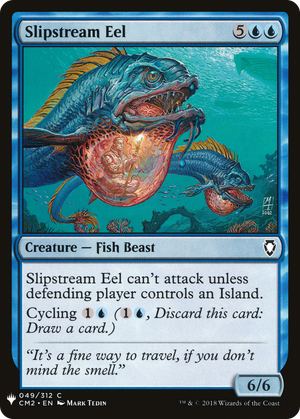
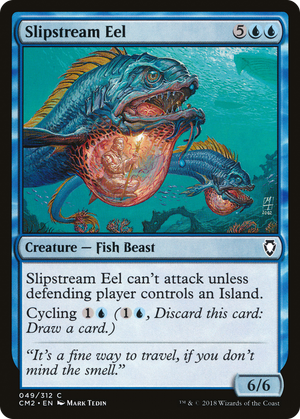
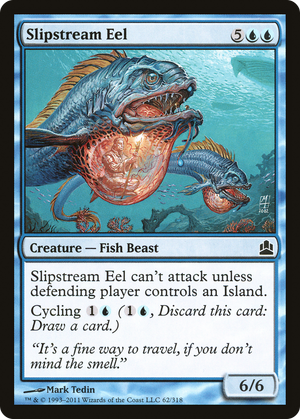
Slipstream Eel


The drawback is the joke and the cycling cost is the punchline. A 6/6 for seven mana already sits at the wrong end of the curve, but the attack restriction tied to the defending player controlling an Island makes the body's offense conditional on something you cannot guarantee. The card's real purpose lives in its second line: pitch it for a card whenever the seven-drop is dead weight, which on most boards it is. This is a deliberate piece of the era's cycling design philosophy, where the marquee creatures were built as flexible cards first and bodies second. The fish gets a body that looks splashy and a restriction that quietly tells you the body is not the plan; the  cycling cost is the rate that makes the slot worth running at all. It is a draw spell wearing a sea-monster costume, and the costume only comes off in the rare game where you are flooded out, ahead, and your opponent happens to be on blue. The Island clause is the kind of build-around flavor restriction that reads as a curiosity now but was part of an earlier willingness to gate combat on land types. Mostly it functions as a reminder that the creature half exists to be discarded.
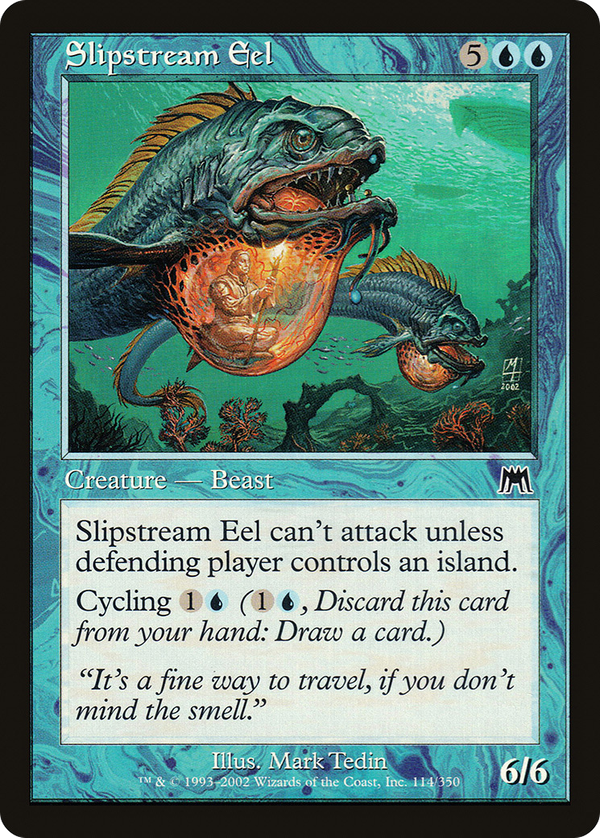
Rules text
(, Discard this card: Draw a card.)