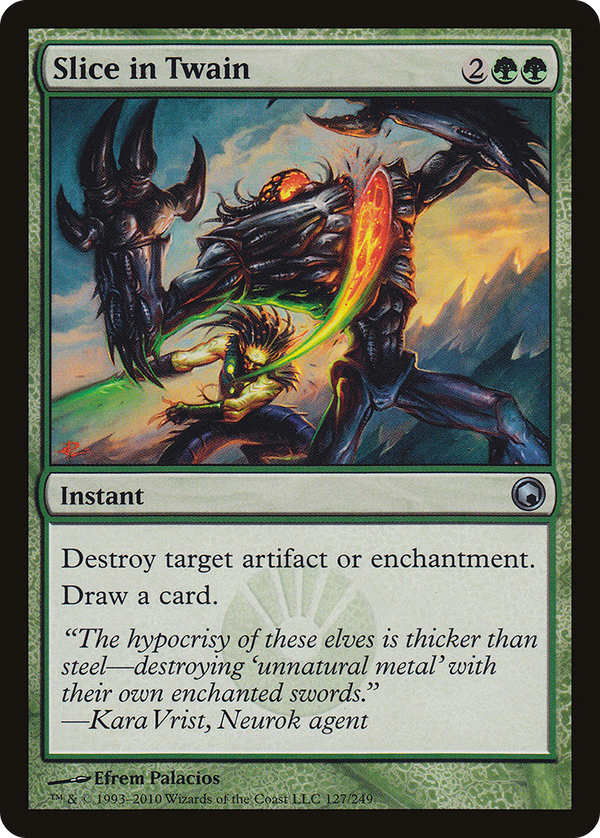
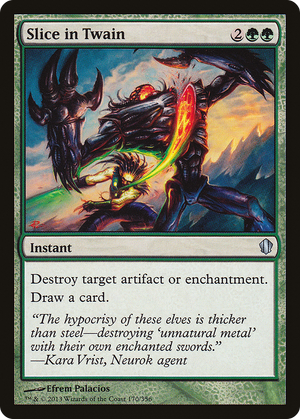
Slice in Twain


Naturalize and Disenchant set the green template for breaking an artifact or enchantment: trade your card for theirs, accept that the answer does nothing when the opponent never plays a target, and live with the dead draw. The cantrip stapled here changes the card economy more than the rate suggests. A bare removal spell is a one-for-one at best; replacing itself with a fresh card makes this answer card-neutral, so destroying their problem permanent never leaves you down on resources for having held it. The catch the current text missed is that the draw is welded to a legal target: this still needs an artifact or enchantment on the battlefield to cast, so it is not an empty-board cantrip. The insurance it offers is narrower than that, but real. When the opponent does present something worth breaking, you answer it and refill in the same motion, which is exactly the math that lets a deck run wide artifact-and-enchantment coverage maindeck without the usual hedging anxiety about flooding on situational removal. The price of that insurance is two extra mana over the cheaper green disenchant effects, which keeps it honest where tempo outweighs card economy. Green's slice of permanent-hate has always run wide and slow, and this sits at the comfortable end of that tradition: instant speed to catch an equipment activation or a freshly resolved enchantment, with the cantrip paying you back the moment a target exists.