Slavering Branchsnapper


The seven power on a six-mana trampler is the reward for accepting that most copies never touch the battlefield. Big green beaters live and die by their flood insurance: draw the fatty when you have no lands and you have a dead card in hand, so the whole design bets that a cycling clause makes the top-end unconditionally keepable. Pay two mana in the early turns to discard it and fetch a Forest, smoothing your draw when the six-drop is the last thing you want; hard-cast it later and it swings for seven through blockers. That either-or contract is why the body is allowed to be this aggressive for the rate: a curve-topper you never regret keeping can afford to be a genuine threat rather than a hedged one. Green has been negotiating this trade for as long as it has had cycling creatures and lands, turning excess fatties into fixing at the cost of a slice of raw efficiency, so the card is playable in a shell that would otherwise cut it as too clunky. The trample is what keeps the payoff honest: a 7/6 that gets chump-blocked into irrelevance would hollow out the entire premise, so the keyword guarantees that actually casting it converts into real damage rather than a stalled ground game.
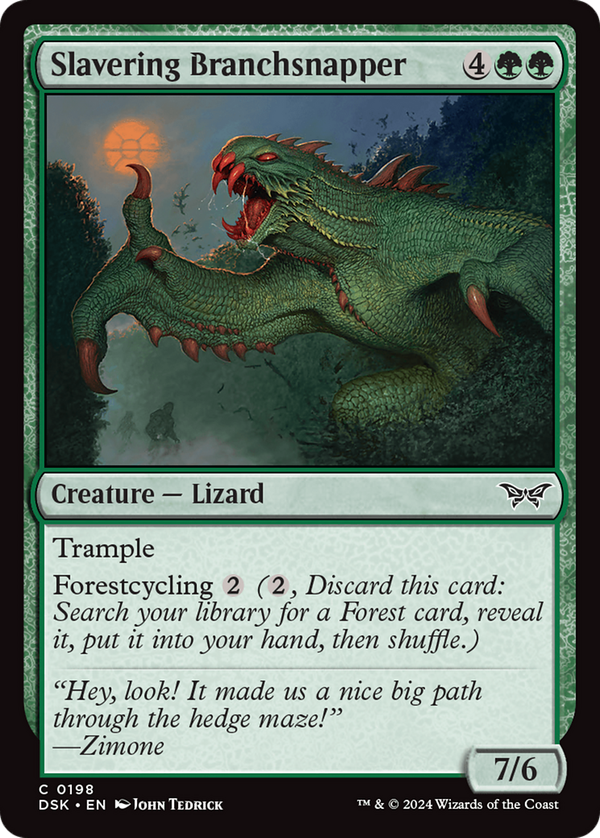
Rules text
 (, Discard this card: Search your library for a Forest card, reveal it, put it into your hand, then shuffle.)