Simic Cluestone

The second mode is the whole reason this exists. A bare mana rock eventually floods the late game with draws you cannot use, so this class of artifact builds in an exit ramp: once the fixing stops mattering, you pay the activation and cash the rock in for a fresh card rather than leave it parked as a dead permanent. It enters untapped and contributes color the turn it lands, but the price of that flexibility is steep on every axis. The draw mode demands both colors plus the artifact's own sacrifice, it replaces only a single card rather than offering the explosive acceleration a dedicated rock provides, and the whole package asks you to wait. This is fixing pitched at decks that want color smoothing without permanently committing a slot to something that loses all value once the board has filled out: safe, replaceable, trading early speed for guaranteed relevance later. The lineage runs through the full cluestone cycle and forward into the later Guildgate-and-Locket designs that refined the same trade, the idea that a fixing piece should never become a card you regret drawing. Slow and modest, yes, but built so it never sits in hand as a liability when the game goes long.
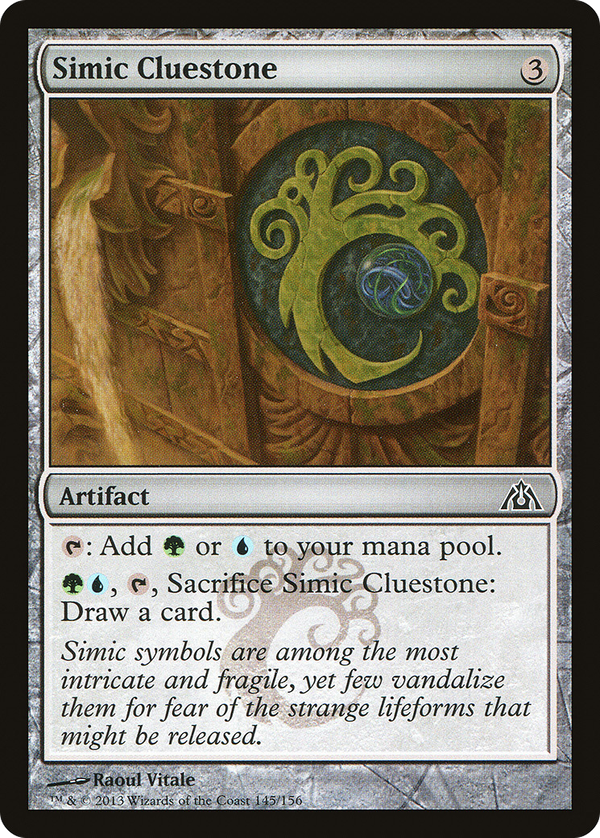
Rules text
 : Add
: Add  or
or  .
, , Sacrifice this artifact: Draw a card.
.
, , Sacrifice this artifact: Draw a card.