Silvergill Adept


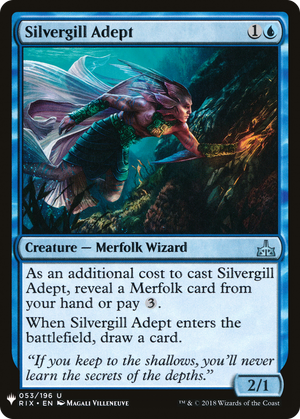
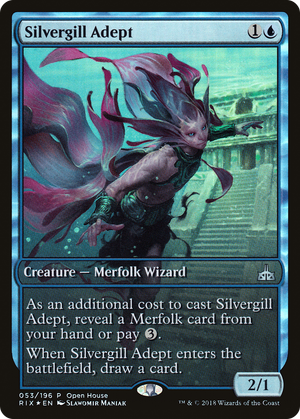
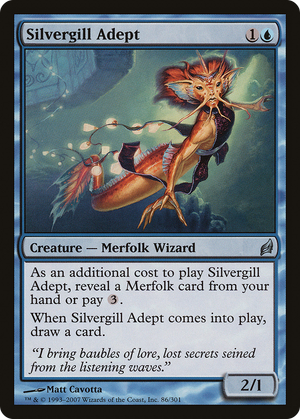
The additional cost is the whole engine here: reveal another Merfolk and the 2/1 body draws a card for two mana, replacing itself and adding to a board of cheap Merfolk you have already committed to. That reveal clause is what makes it a tribal payoff rather than a generic cantrip creature; the alternative  tax exists so the card is castable in a pinch, but it is plainly the off-ramp, not the road. Functionally this answers the problem every aggressive tribal strategy runs into, which is running out of gas before the opponent stabilizes. A flooded board of lords and one-drops wants a way to refill, and a creature that draws on entry while still adding to the count solves both halves at once. The reveal is binary, not scaling: one Merfolk in hand turns the cost off entirely, so the deck-construction demand is simply density, pack enough Merfolk that revealing one is never a real sacrifice. Outside that shell the card is a clumsier Elvish Visionary saddled with a tax, which is the point: it was built to reward proof of tribal allegiance, not to function as a freestanding cantrip. The design has aged into a recurring template for tribal card draw, the small attacker whose draw trigger is paid for by showing a member of the tribe.
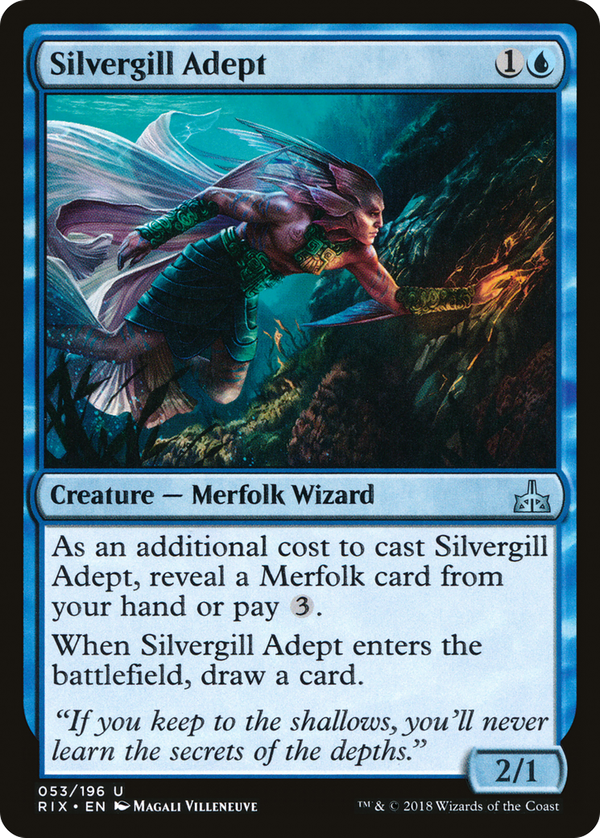
Rules text
.
When this creature enters, draw a card.