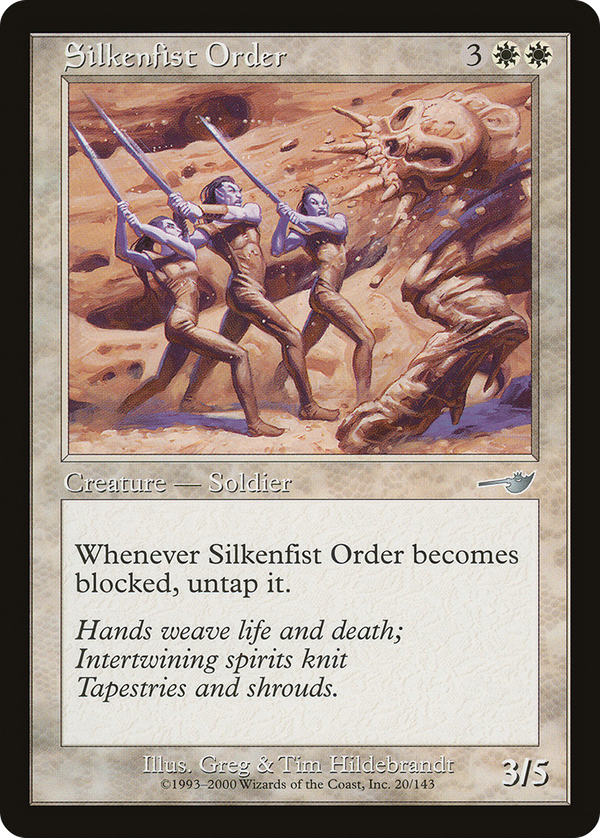
Silkenfist Order


The untap-on-block clause is a quiet piece of combat math, and the interesting part is who controls it: the defender, not the attacker. The trigger fires only on becoming blocked, so the opponent decides whether to hand the Order its open status. Block it and the 3/5 untaps after blocks are declared, leaving it standing up to guard the swing back (assuming it survives the exchange; a blocker with five or more power still trades it down, and the untap does nothing to remove it from combat or save it). Let the attack through and they take three but the Order stays tapped, which actually helps their counterattack into an open board. That tension is the whole design. The card turns the basic blocking decision into a choice between two costs: commit a blocker and watch the attacker keep its guard up, or eat three damage to deny the Order its untap and keep it tapped for the swing back. It rewards an aggressor who wants to press without surrendering defense, an unusual ask for a body of this size in white, where the era's sturdy Kor and rebel bodies were built to either swing or block, rarely both in a turn cycle. The reward lives on the most overlooked axis of combat: who has open blockers once the dust settles, which is subtler than the toughness number suggests.