Silent Clearing
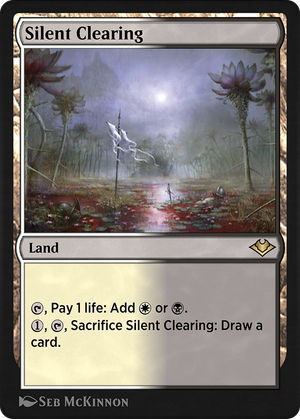
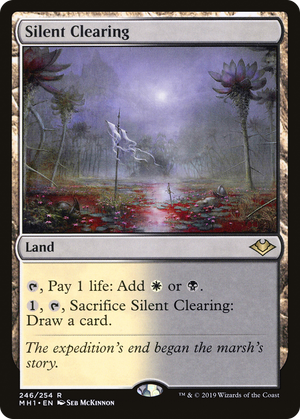
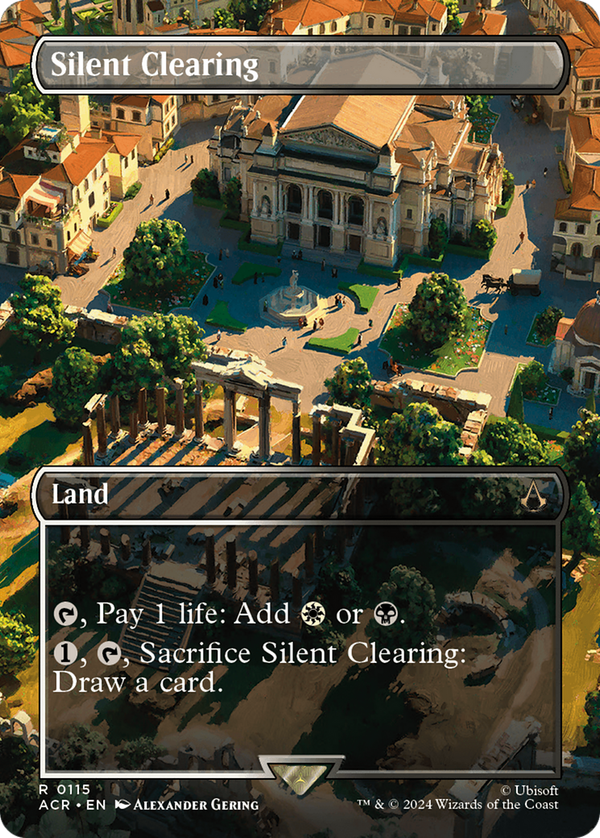
The Horizon Canopy template pushed into two-color territory, and grafting the pain onto the fixing is what makes it work. The mono-color Canopy land answered the oldest complaint about untapped lands in a low-curve aggressive deck: the fifth and sixth lands are dead cards when you flood, so a source that can cash itself in for a card converts an unwanted draw step into gas. Extending that idea to Orzhov meant the color fixing itself now bleeds you: tapping for either white or black drains a life, and every activation is a small self-inflicted clock. That single mana ability does double duty, fixing early and pinging you a little each time, so the card is priced for decks that intend to close before the accumulated life loss matters. The draw clause is the release valve on flood, spent once the manabase is no longer the bottleneck, and it costs a slot that never floods you back. The design tension lives in that trade: you pay life to run smooth two-color mana, then sacrifice the land for a card when the game runs long. That combination (life-cost fixing, a built-in clock against yourself, and a flood-insurance draw) is why it belongs in the leanest white-black decks rather than the grindy ones that would rather keep every land in play. It is not a filter land: the mana comes straight off your life total, not out of other mana.
Rules text
 , Pay 1 life: Add
  or
or  .
.
 , , Sacrifice this land: Draw a card.