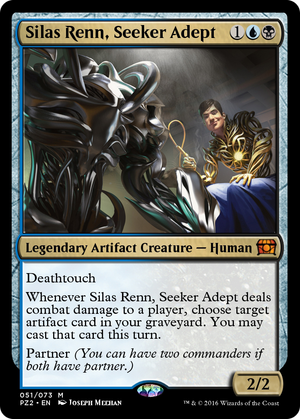
Silas Renn, Seeker Adept



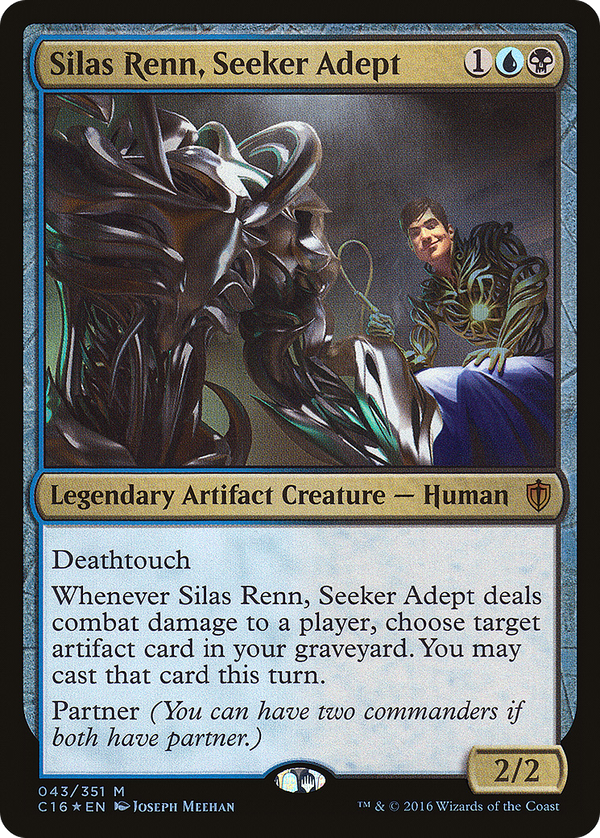
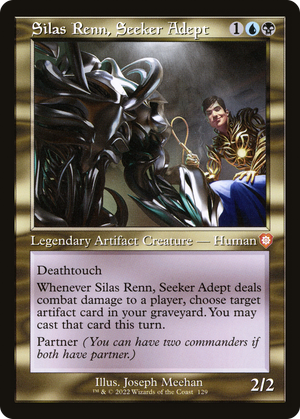
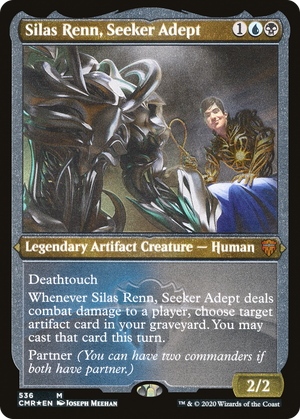
Deathtouch on a 2/2 is the connective tissue here: it lets a small evasionless creature trade up in combat and, more importantly, makes the threat of getting through credible without committing a real beater to the board. The combat trigger is the engine. Every time this connects, a dead artifact in your graveyard becomes a live spell again, and since the trigger repeats on each hit, the recursion is recurring rather than one-shot. That reframes what your graveyard is for. Mana rocks, equipment, artifact creatures, sacrificed value pieces: anything that died can be cast again the turn you land a hit, so the deck builds toward artifacts worth dying and worth rebuying. The wording does the balancing work: it targets an artifact card in your graveyard, so the trigger is empty if you have not been feeding it, and the cast permission expires at end of turn. You are recurring artifacts as a reward for connecting, not assembling a passive loop. Partner frames the whole project. The combat-damage clause asks you to skew Dimir into an aggressive, artifact-dense build that wants to attack, an unusual posture for the colors; pairing this with a second partner commander lets you bolt on the protection, evasion, or sacrifice outlet that an attacking artifact deck otherwise lacks. The body is a means to an end. The graveyard is the resource. The hit is the toll you pay to get your artifacts back.