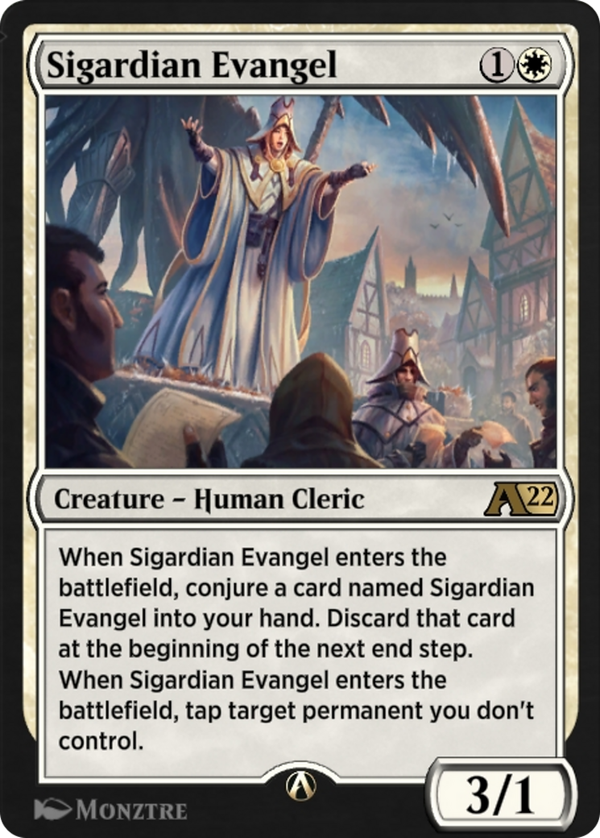
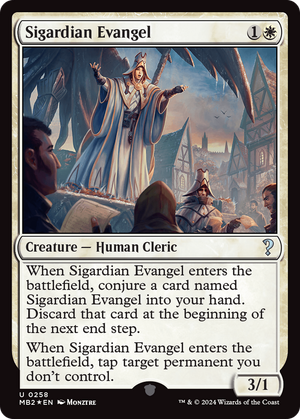
Sigardian Evangel


Conjure exists because paper Magic cannot make a card out of nothing mid-game, and this is one of the tidiest demonstrations of what that digital-only verb buys a designer. The body is a fragile two-mana beater with a tempo tap stapled on, the kind of enters-the-battlefield disruption white has printed in many forms. What makes the design worth studying is the loop it sets up: the first trigger fabricates a fresh copy directly into your hand, so casting one Evangel hands you the next, and each recast taps down another blocker or mana source before the end-step discard reclaims the surplus. That discard clause is the whole balancing mechanism. Without it you would be building an inexhaustible chain of tempo and free bodies; with it, the conjured copy is a use-it-this-turn resource, forcing you to spend the mana now or watch the card evaporate. It turns a would-be engine into a burst, rewarding tight sequencing on the turn you cast it rather than passive accumulation over many turns. Conjure lets the designer print a card that generates its own follow-up without touching your library or your graveyard, sidestepping the deck-thinning and recursion math that a paper equivalent would carry. The result is a self-replenishing aggressor whose ceiling is capped by the mana you can pay and the clock a single end step imposes.