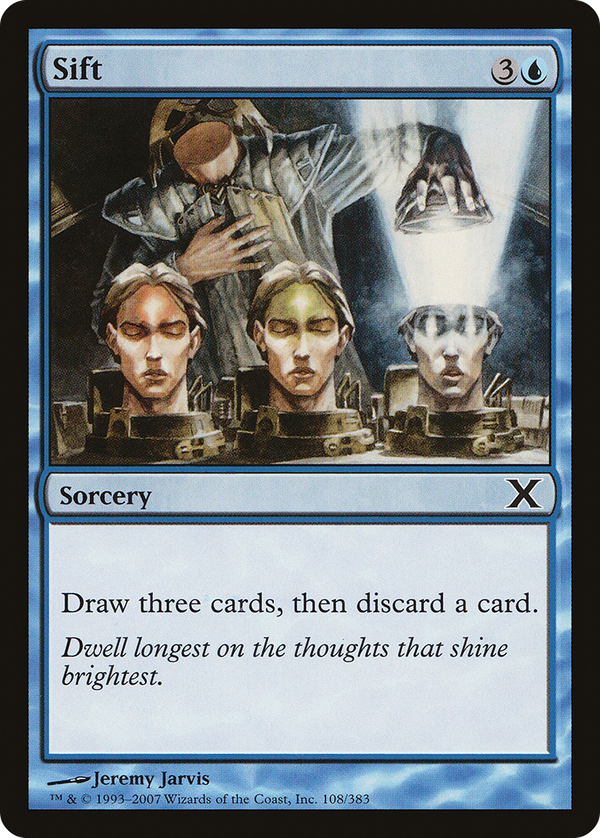
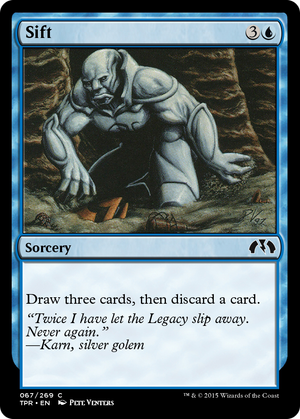
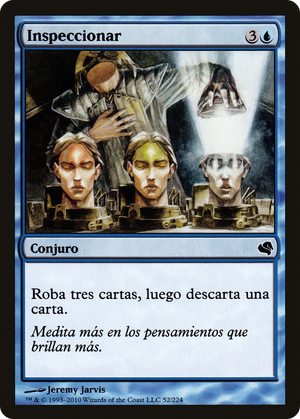
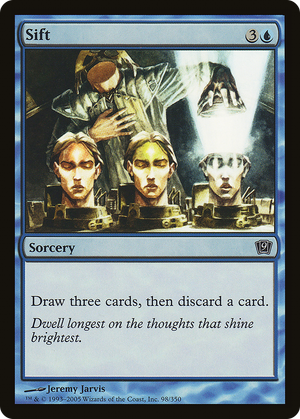
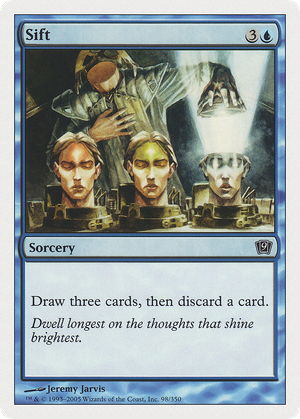
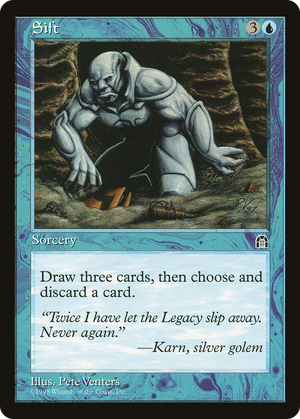
Sift


Card filtering rendered as a single sorcery: draw three, then shed the one that fits worst. The discard reads less like a cost than a feature, since seeing three before deciding what to pitch means you keep the two that fit the moment and drop the dead one. The net effect still leaves you up a card, but raw advantage was never the point; the selection is. A flat three-card draw takes whatever the top of the library offers, while this converts a slice of randomness into a choice, which is why blue control shells have long favored the shape over slightly cheaper, slightly less selective alternatives. That structure has proven durable enough to recur under different names and rates for decades, the draw-three, discard-one template surfacing whenever blue wants a reliable hand-refueler that smooths a clunky draw rather than simply piling on cards. Sorcery speed is the constraint that keeps the deal honest: you cannot hold it up as a reactive trick or fire it on the end step, so it sits as a main-phase concession, a turn spent reloading instead of developing the board. It is not flashy, and it does not win games by itself; it is the workmanlike consistency engine that lets a deck dig toward its threats and answers while still inching its card count forward, the quiet plumbing that keeps a control draw from stalling out.