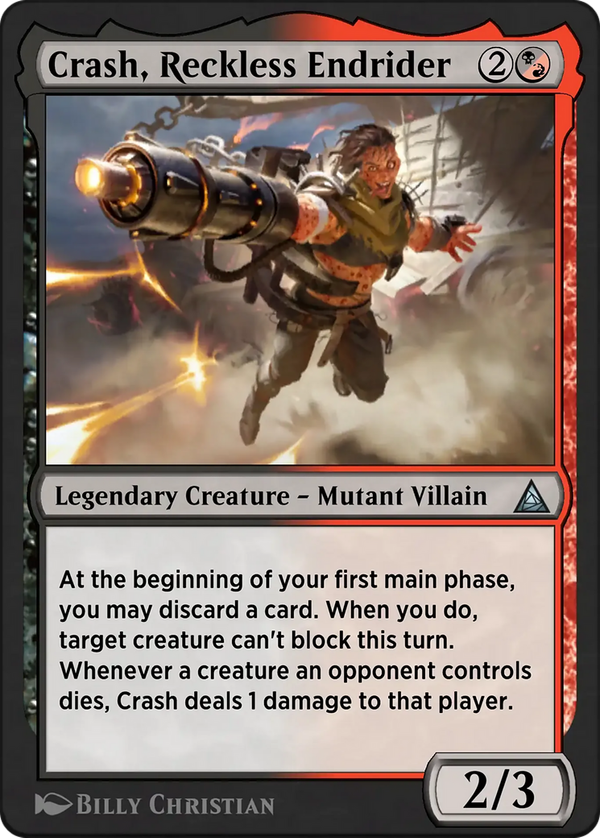
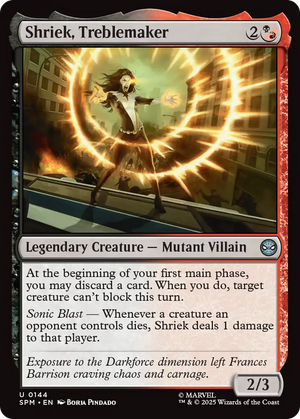
Shriek, Treblemaker


The discard clause is the workhorse, and it costs less than it looks. At the start of your first main phase you may pitch a card, and when you do, a target creature can't block for the turn: a falter effect, not evasion granted to your own attacker. The distinction matters. You are turning off a blocker, so the value is in choosing which defender to neutralize before you commit to combat, and the discard often costs you nothing you weren't already done with. Sonic Blast reframes the body from a modest 2/3 into a punishment engine pointed at a single opponent: every time one of their creatures dies, that player takes a point. This is the opposite of an aristocrats plan; the payoff scales with how efficiently you dismantle the other side's board, so removal-heavy midrange and creature-choked stalls that trade attrition-style are where the pings accumulate. The two abilities push the same direction (grinding an opponent down through their creatures) without needing each other to function, which is why the frame stays small; the payoff lives in the triggers. The hybrid pip lets it anchor either half of its color pair without demanding both, a real flexibility for a three-drop meant to hold down a plan. What holds it in check is that both halves lean on your own game plan to matter: nothing to discard and the falter goes dark, no opposing deaths and the Blast is silent.