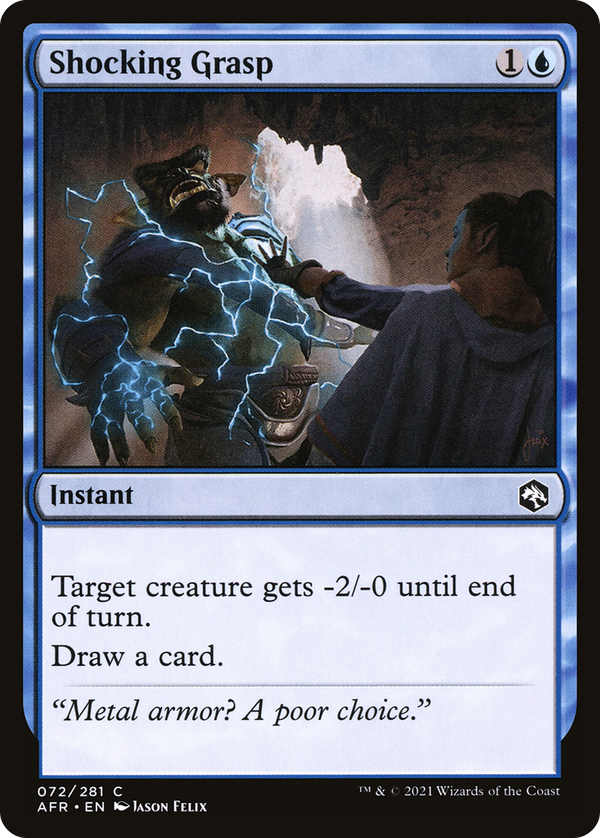
Shocking Grasp


Naming a combat trick after a wizard's jolt and then filling in the effect with a defensive power reduction plus a cantrip is a small piece of design honesty: the -2/-0 does not kill anything, it blunts an attacker or forces a bad block, and the card draw is what keeps the exchange from costing you tempo you cannot spare. This is defensive interaction with a self-replacing rider, the trick that rarely sits dead in hand. The power-only reduction is a deliberate constraint that separates it from removal proper: it cannot end a creature's life, only its usefulness for one combat step, which is why the effect is priced as a shrink rather than a hard answer. But the constraint runs deeper than the numbers suggest, because both halves of the card hang on the same target. It needs a creature in play to cast, and if that creature is removed in response, the spell fizzles and the draw goes with it. The cantrip is not a floor you can always cash in; it is contingent on the exchange resolving as intended. It descends from the cheap blue cantrips that let control decks trade a marginal battlefield effect for a fresh card and stop worrying about running out of gas. The reduction is situational, and the draw only feels unconditional until an opponent points a removal spell at the same creature you did.