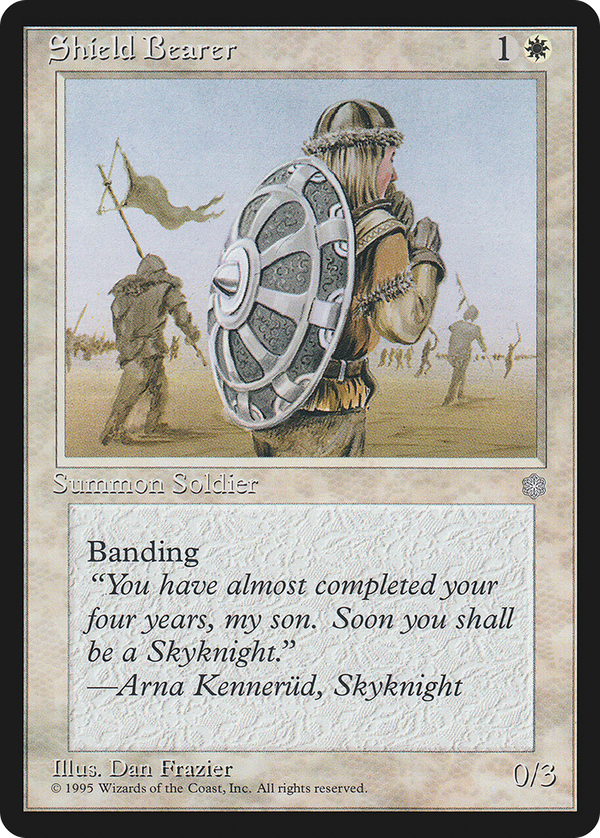
Shield Bearer


A textbook study in why banding is the most notorious rules text Magic ever printed. The body itself is unremarkable: a 0/3 Human Soldier whose three toughness exists to absorb attackers without dying, but note that it can attack as readily as block, which is exactly what the keyword stapled to it asks for. Banding folds two separate combat reroutings into one word. On offense, it lets your attackers move as a clump that the defender must block as a group, which means even a 0/3 can lead an attack and shelter the creatures banded with it. On defense, it hands you, the blocker's controller, the right to assign the attacking creature's combat damage among the creatures that are blocking it. That inversion is the genuinely strange part, overturning the normal rule that the attacking player decides where combat damage goes; the practical result is a defensive trick an opponent often cannot read, because a 0/3 that bands with anything lets you eat an attacker's damage in whatever proportion suits you. Banding's complexity (the layers of timing, the divided-damage exception, the interaction with first strike and multiple blockers) is exactly why it was retired from the keyword rotation and survives only on old cards like this. As design history, it marks the high-water line of the era when Magic was still willing to print mechanics whose corner cases the rules engine could barely contain.