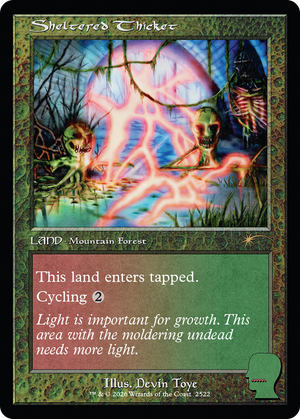
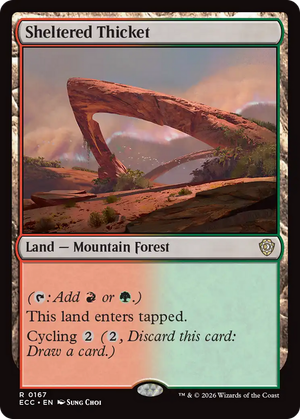
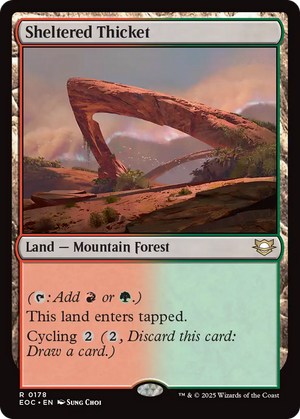
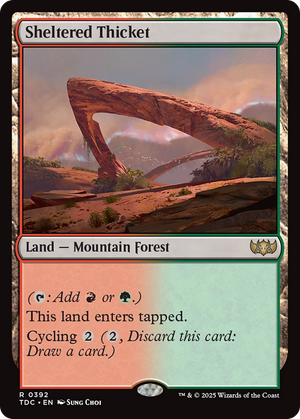
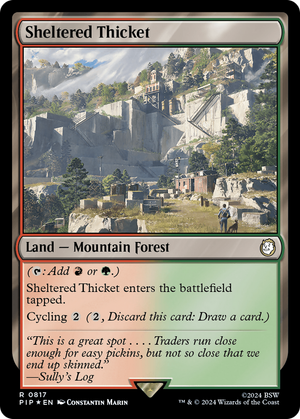
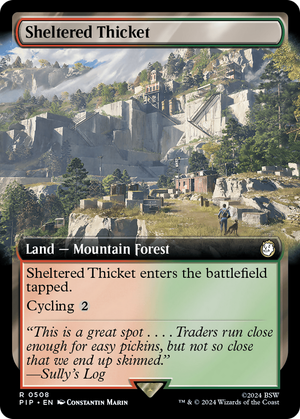
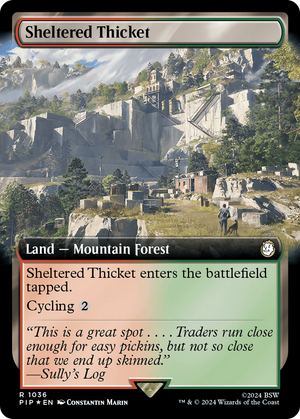
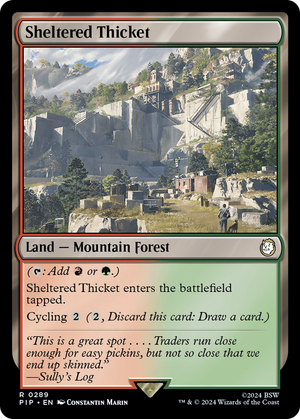
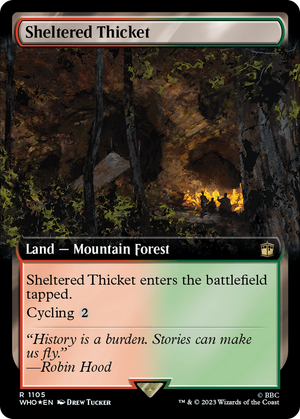
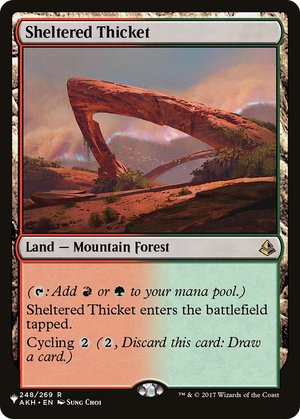
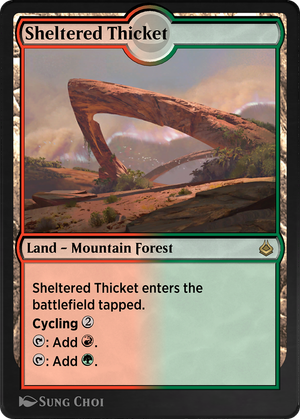
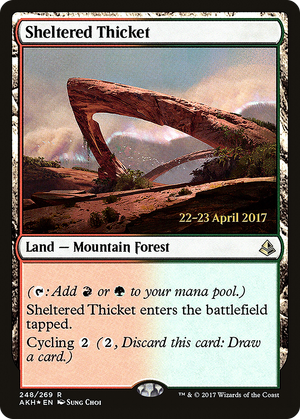
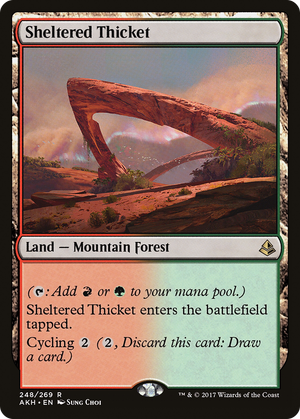
Sheltered Thicket
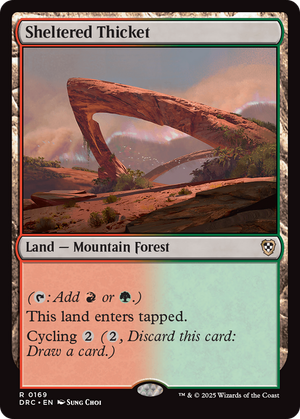
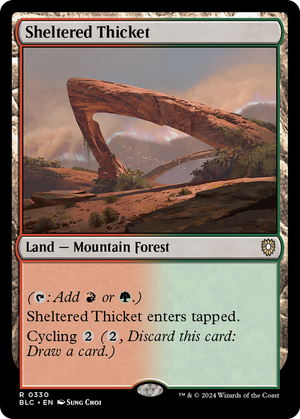
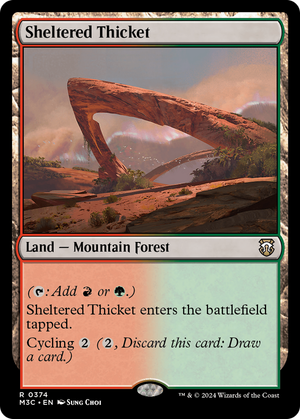
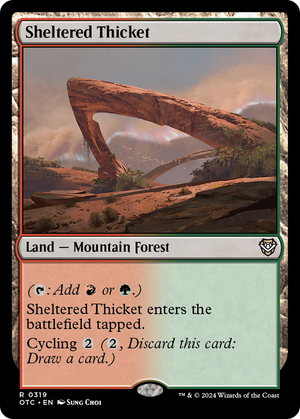
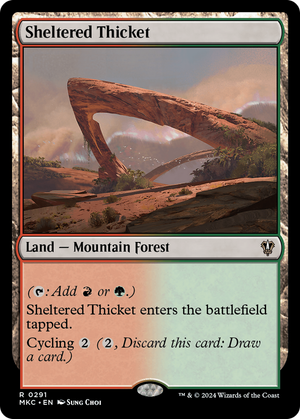
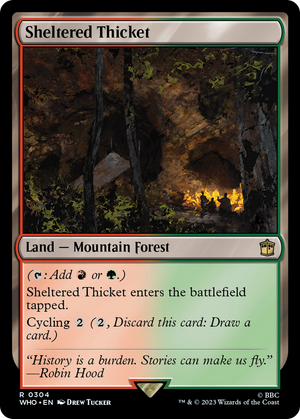
Flood insurance, sold as a tapland. The problem this design answers is the one every fixing land shares: the more lands you run to hit your colors on curve, the more often you draw one too many and watch a do-nothing permanent clog a late-game hand. Cycling for two converts that dead draw into a fresh card, so the deck can afford to run a higher land count than its curve strictly wants and turn the surplus into action when it arrives. The entering-tapped clause is the price for that flexibility. A dual source that also doubles as a cantrip would carry no downside otherwise, so the design loads the tempo cost up front, where a tapped land stings least: in the early turns, before you are deploying threats every turn anyway. The Mountain Forest typing does more work than the red-or-green mana suggests, since it lets fetch effects that search by basic land type pull this directly, folding the land into manabases built around types rather than colors. It belongs to a cycle of ten two-color cycling lands that formalized a deckbuilding instinct players had been improvising for years: overload on lands, then redeem the excess for cards. That is the real idea under the tapland frame, an answer to mana variance wearing a fixing land's clothes.
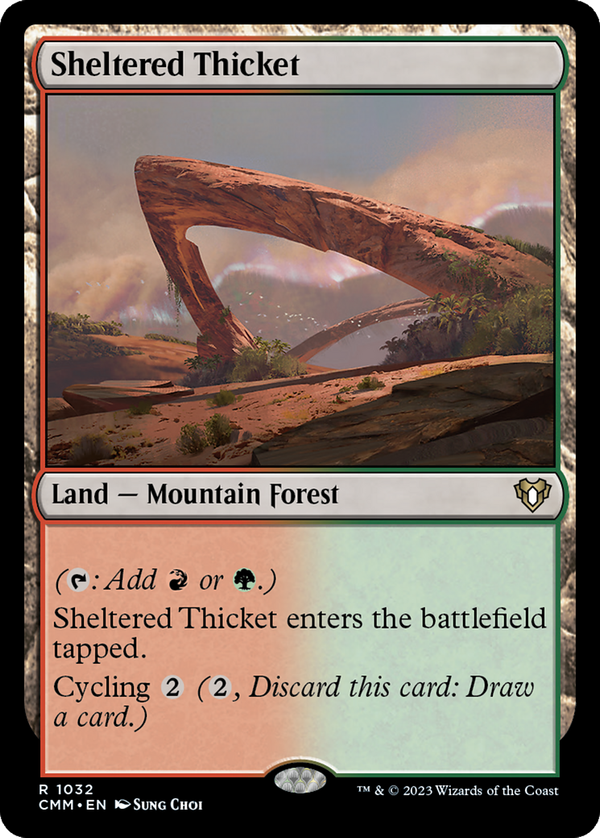
Rules text
 : Add
: Add  or
or  .)
This land enters tapped.
Cycling
.)
This land enters tapped.
Cycling  (, Discard this card: Draw a card.)