Shadow Rift

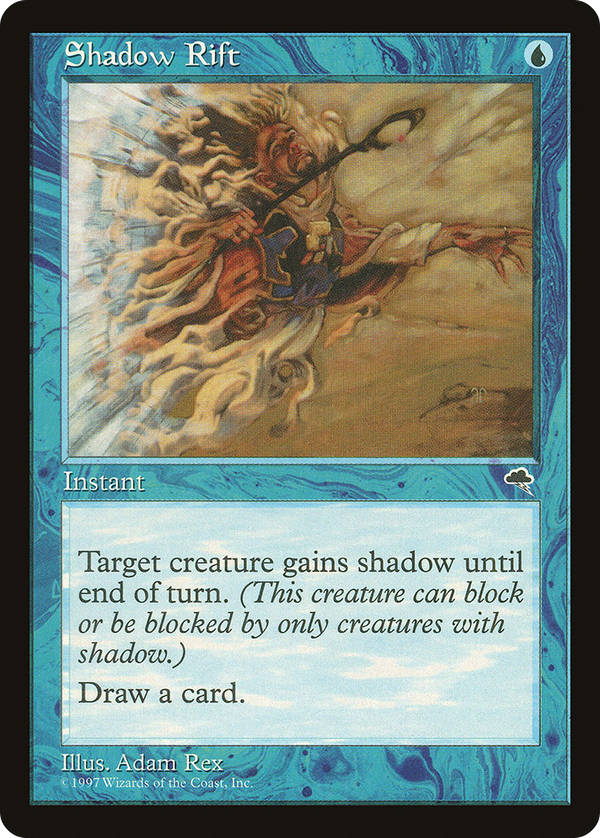
Granting evasion to a creature that has none is the whole pitch here, and the cantrip is what keeps the trick from ever feeling like a wasted draw step. Shadow was Tempest's flagship keyword, and because so few creatures carried it, handing it to an attacker for a turn meant almost nothing on your opponent's side could stand in the way. Stapling a card to the spell is what keeps the rate honest: the effect requires a target creature, so it will not fire on an empty board, but as long as you have a body to point it at, the cantrip means slipping a threat through never thins your hand. The instant speed matters for the deploy window rather than for combat math. Evasion has to land before blockers are declared, so the natural play is to cast it on your upkeep or at the start of combat, then swing into open air. Holding it open buys you the right to let an opponent commit to a board state before you decide whether spending the slot to push a threat through is worth it, and to replace the card the moment you do. The structure has aged into a template Wizards reuses constantly: cheap conditional evasion attached to a cantrip so the spell replaces itself and demands nothing from the rest of your hand to fire.