Selesnya Locket

A fixed-cost mana rock with a built-in mana sink, sold at the price of running below the curve. Each guild in this cycle got the same skeleton: a three-mana artifact that taps for either of two colors, plus a steep activated cost that sacrifices the rock to draw two cards. That draw ability is why the Locket earns a slot past its early turns. A naked color-fixer that taps for green or white is unremarkable, and a deck that ramps into nothing is a deck that floods out; the four hybrid pips on the sacrifice ability convert a dead rock back into gas once the early ramp job is done. The hybrid notation matters more than it reads:  accepts either color, so a deck splashing only one half of the guild can still pay the whole activation, more forgiving than the strict two-of-each-color costs older draw rocks demanded. The trade-off is rate. Casting the artifact costs three, firing the ability costs four more, and the artifact itself is consumed in the process; seven mana across two commitments for two cards is a poor exchange wherever efficiency is measured. That poor rate is the point. The Locket lives where mana values run cheap and late-game inevitability is the only currency that matters, a smoothing tool first and a topdeck-insurance policy second, built for decks that want fixing early and refuse to keep drawing it late.
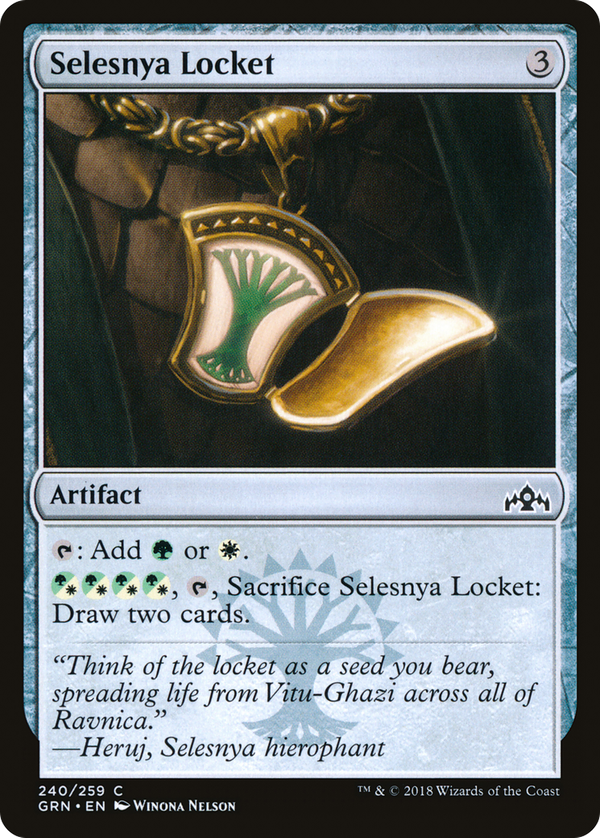
Rules text
 : Add
: Add  or
or  .
, , Sacrifice this artifact: Draw two cards.
.
, , Sacrifice this artifact: Draw two cards.