Seeker of Insight


The conditional gate is the whole design. A 1/3 wizard with a Merfolk Looter ability would normally be priced higher and held in check by its passivity; the noncreature-spell requirement reshapes it from a value engine that loots every turn into a reward you earn by playing the deck this card wants you in. Cast something cheap (a cantrip, a burn spell, a counter held up the turn before) and the loot comes free, but the body sits inert on a turn you only develop the board. That coupling does two jobs at once: it keeps the rate from being oppressive on the durdle plan, and it nudges a spells-matter shell toward casting noncreature spells it might otherwise hold. The 1/3 frame matters more than it reads, too; three toughness lets it survive the small-ball removal and combat that a more fragile looter would fold to, so the engine actually sticks long enough to dig. It is a piece built for the kind of deck that wants card selection over card advantage: trade a card down to find the one you need, smoothing draws while the noncreature count does the heavy lifting. The looting itself is unremarkable; the condition is the design, turning a generically useful filter into a payoff that only fires for the player already doing what the card was made to encourage.
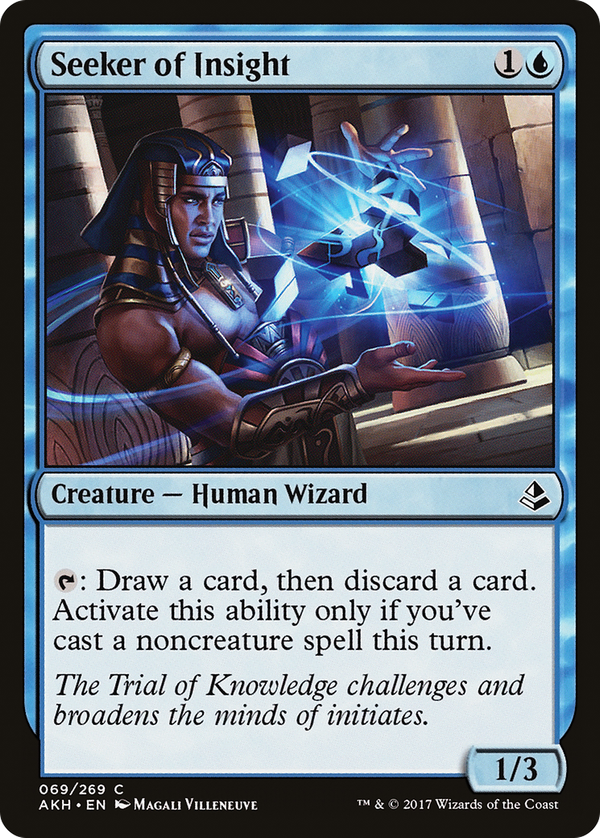
Rules text
 : Draw a card, then discard a card. Activate only if you've cast a noncreature spell this turn.