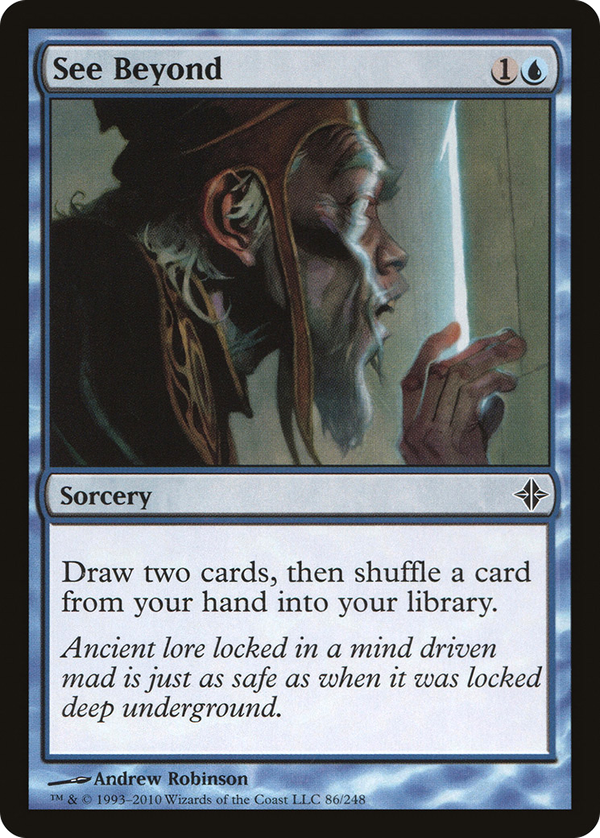
See Beyond


The clever bit is the order of operations: you draw two first, then shuffle a card back, so the card you bury is paid out of a hand that has already grown. The net is card parity, not card advantage. You spend one card to cast it, draw two, then pick a card (often one of the two you just drew, or a dead card you were already holding) to return, ending where you started but with the worst card gone. The shuffle is the selection: a flooded land, a removal spell with no target, a situational answer you would rather draw later than hold now goes back into a randomized library. That last word matters. Because the chosen card returns to the library rather than the graveyard, this is the inverse of a self-mill spell; it keeps cards out of the bin, so it has no home in shells that want fuel there. Where it earns its keep is alongside top-deck manipulation: returning a card to a shuffled library resets a stacked top you have outgrown, handing tutors and scry effects a fresh deck to work with. The sorcery-speed restriction locks the effect to your own main phase, so it never becomes an end-step instant. This is smoothing, not value: it does not win games, it keeps a blue deck from drowning in its own dead draws while quietly upgrading the cards it does hold.