Second Sight


Entwine here is a discount on two effects that are each barely effects at all. Looking at the top five cards of a library and rearranging them, with nothing drawn and nothing removed, is the faintest information you can buy: no card advantage, no tempo, only foreknowledge and the chance to bury an opponent's best card a few slots deeper in their own deck. That nudge holds only while the library stays unshuffled, so the instant a fetch, a scry-and-reorder, or a tutor disturbs the pile, the arrangement is gone. Paying the entwine cost folds both halves together, sculpting your own next several draws while scrambling theirs, all at instant speed. That timing flexibility is the one genuinely sharp edge, and it is narrower than it looks: to shape the card an opponent draws for the turn you have to cast during their upkeep, before the turn-based draw resolves, and casting it just ahead of any reshuffle simply gives the shuffle a fresh order to undo. The structural problem is that information without a payoff is a luxury good. Reordering a library without thinning it means nothing is ever permanently dealt with, so the card only earns its keep inside a shell already built to convert knowing-and-ordering into action: a deck that punishes a known top card, or strings together set-up turns it has stacked in advance. Absent that engine, the cost buys a peek and a polite reshelving of cards you never get to keep.
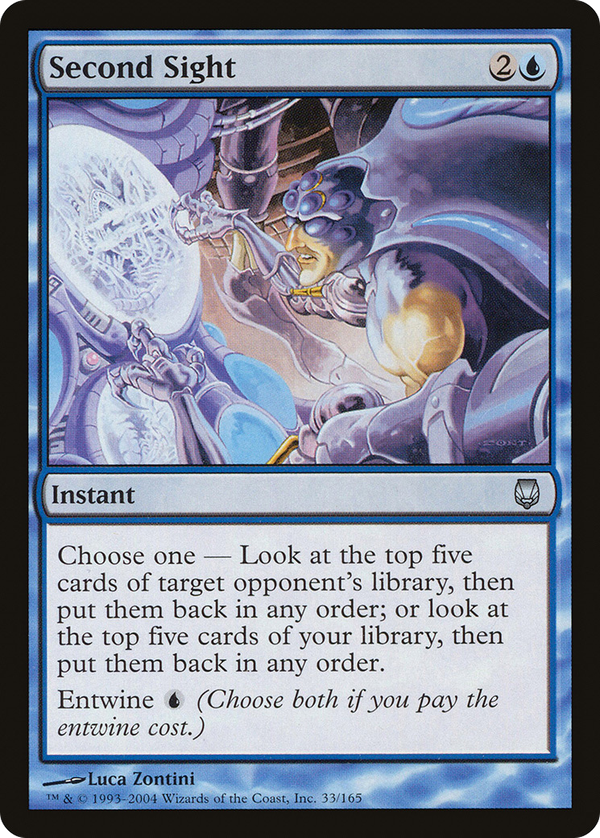
Rules text
(Choose both if you pay the entwine cost.)