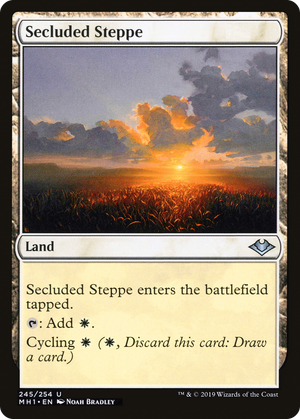
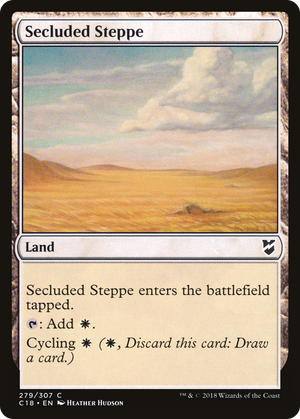
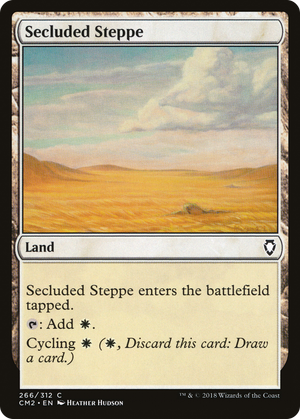
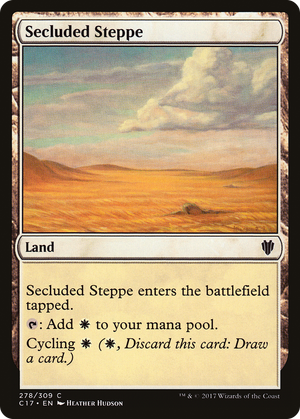
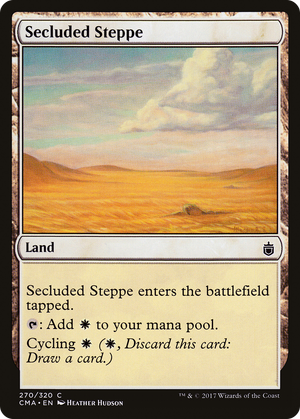
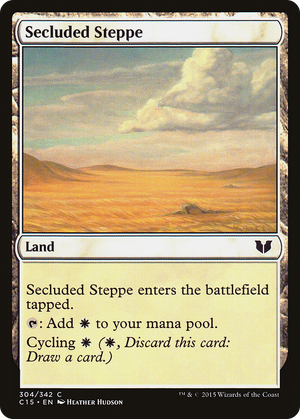
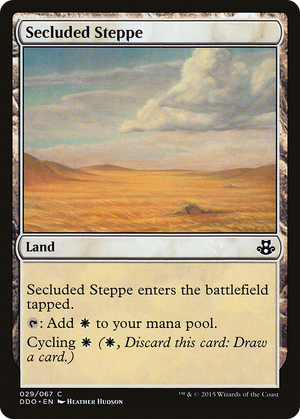
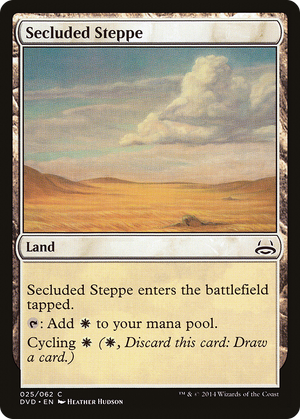
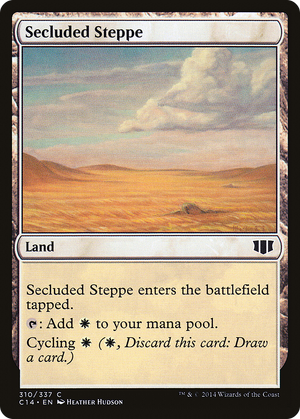
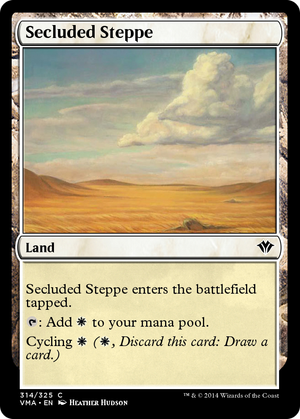
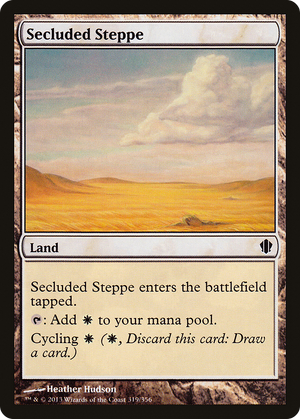
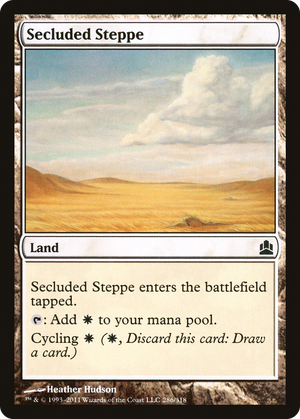
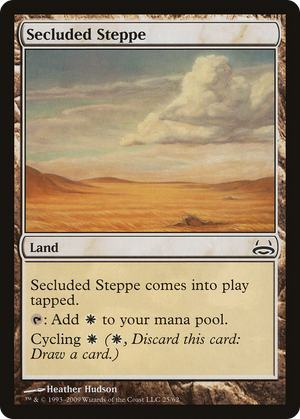
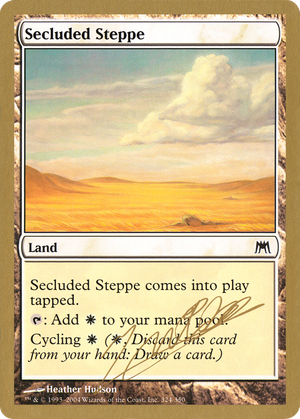
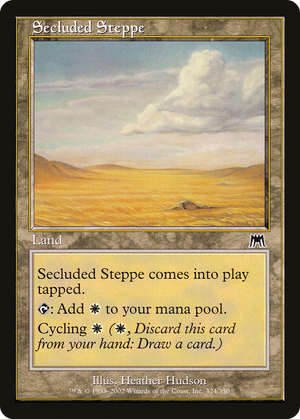
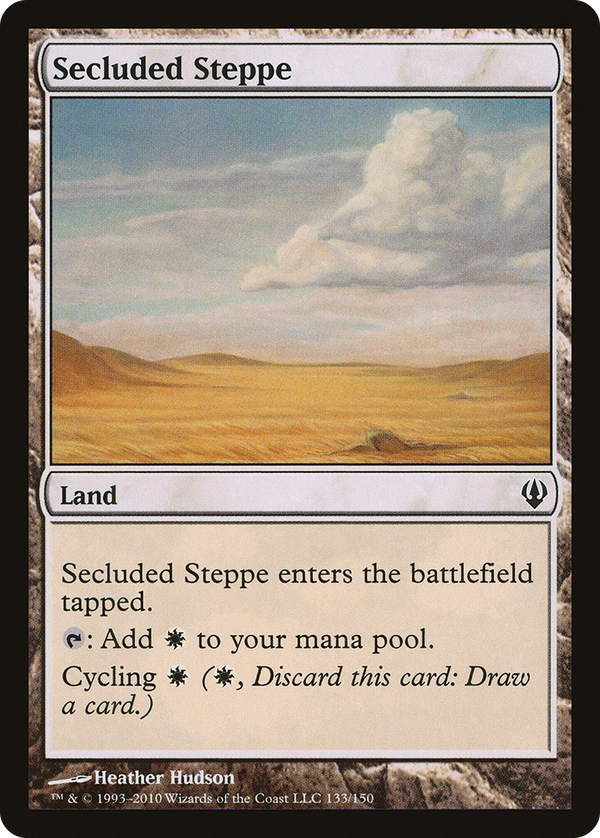
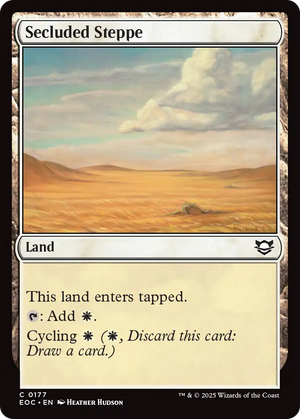
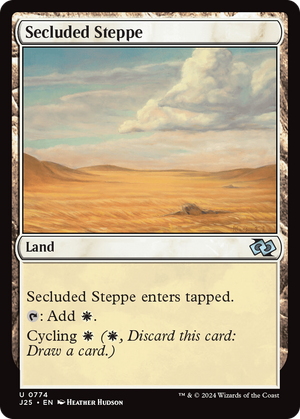
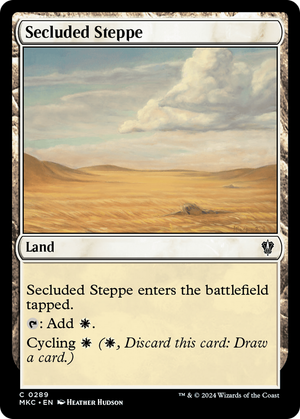
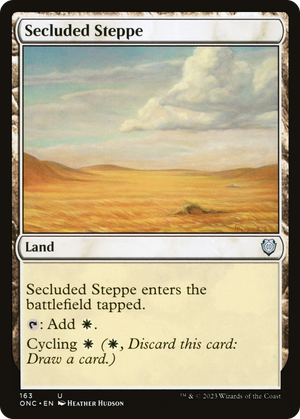
Secluded Steppe
Flood insurance built into the manabase. The trade is explicit and self-correcting: keep this in the early game when you want a white source, and it taps like any other land, the entering-tapped clause being the tax you pay for the option. Draw it in the late game when you already have all the lands you need, and you spend a single white to discard it and dig one deeper, converting a dead topdeck into a live draw. That second mode is what made the cycling lands a fixture of grindy control shells: they let a deck run a slightly higher land count without paying the variance penalty, because the surplus lands stop being surplus. The cycle that introduced them, one per color, addressed a tension as old as deckbuilding itself, the pull between flooding and screwing, and resolved it with a mechanic rather than a flashy effect. The white member belongs in decks that want to play long games, where every card spent on mana is a card not spent winning, and a land that can become a card late is worth the tapped-land cost early. The elegance is that nothing about the design is wasted: in a flood, it is a cantrip; in a screw, it is a land; and the only price is one turn of tempo paid up front.
Rules text
 : Add
: Add  .
Cycling (, Discard this card: Draw a card.)
.
Cycling (, Discard this card: Draw a card.)Format Status
More formatsFewer formats
Other printings
- Edge of Eternities Commander#177
- Foundations Jumpstart#774
- Murders at Karlov Manor Commander#289
- Phyrexia: All Will Be One Commander#163
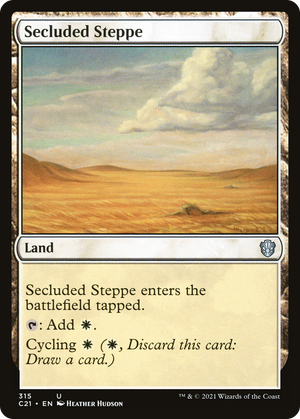
- Commander 2021#315
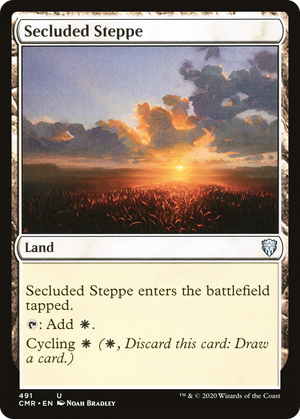
- Commander Legends#491
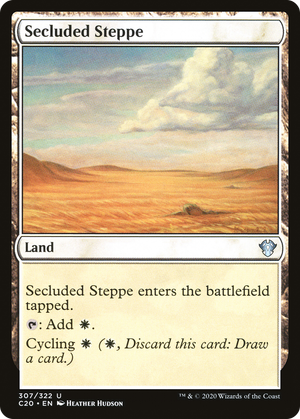
- Commander 2020#307
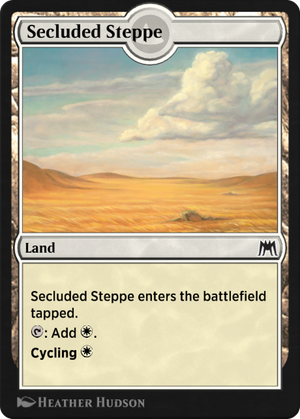
- Historic Anthology 2#24
Show all 23 other printings
- Modern Horizons#245
- Commander 2018#279
- Commander Anthology Volume II#266
- Commander 2017#278
- Commander Anthology#270
- Commander 2015#304
- Duel Decks: Elspeth vs. Kiora#29
- Duel Decks Anthology: Divine vs. Demonic#25
- Commander 2014#310
- Vintage Masters#314
- Commander 2013#319
- Commander 2011#286
- Duel Decks: Divine vs. Demonic#25
- World Championship Decks 2004#jn324
- Onslaught#324