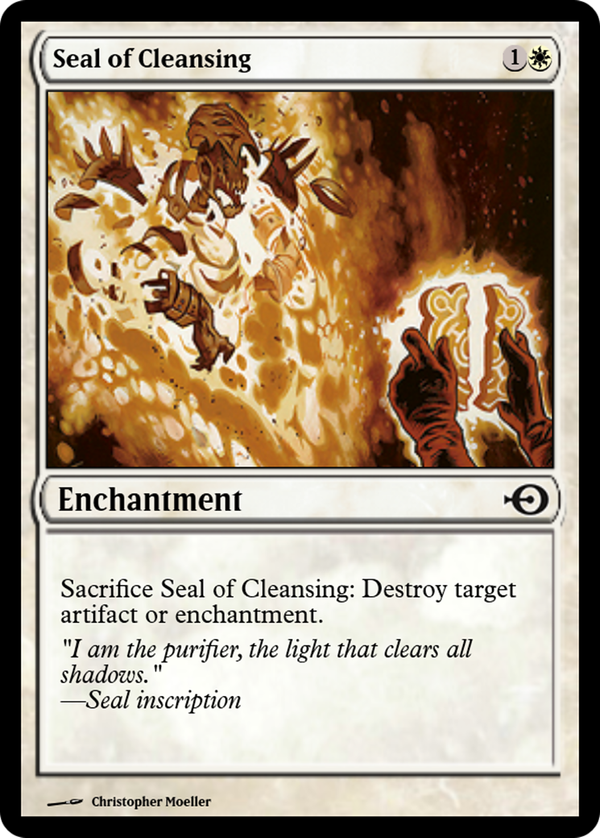
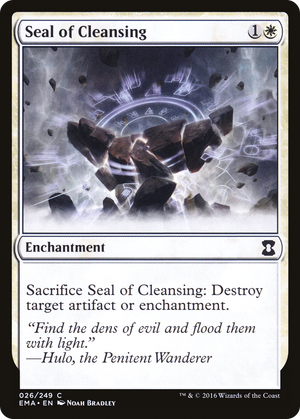
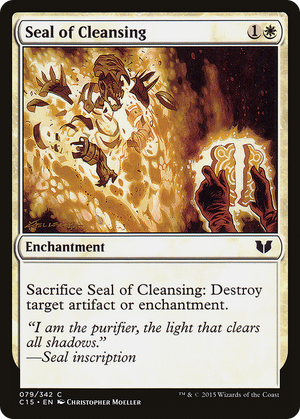
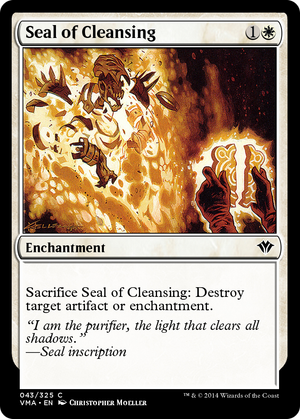
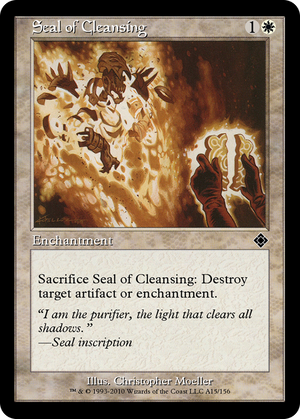
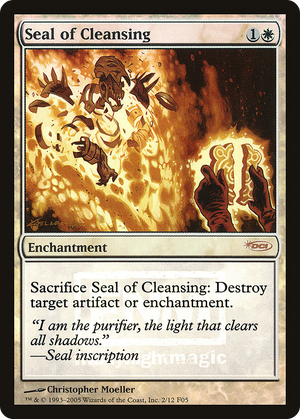
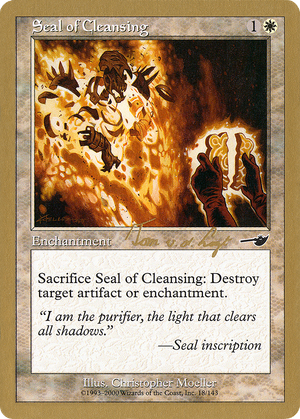
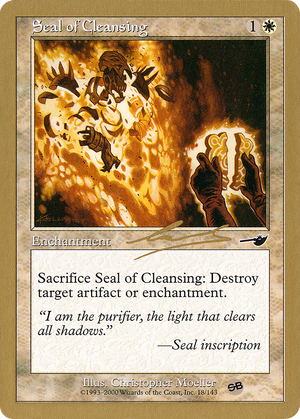
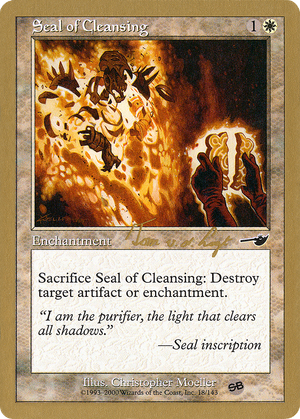
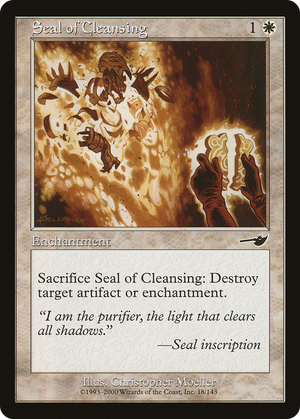
Seal of Cleansing


Disenchant has a sequencing problem this design quietly solves: the instant-speed answer costs you a card-in-hand an opponent can play around, watching for the open mana that signals it. This pays that mana on a quiet turn instead, leaving a permanent on the battlefield that converts the destroy into insurance you have already bought. The strategic shift is in the timing of the cost, not the effect. An opponent scanning for untapped lands sees none, because the mana was spent turns ago, which makes the sacrifice uncounterable in practice (the spell that mattered already resolved) and immune to discard once the enchantment is down. The price is twofold: you commit the two mana whether or not a target ever shows up, and a dead enchantment is a wasted card rather than a held option. There is also a visibility trade. The permanent sits face-up the whole time, so you broadcast that the answer exists even as you obscure when it will fall; the threat is known, but the window is not. This pre-pay logic ran through a whole family of similar permanents from the same era, each turning a reactive spell into a proactive enchantment so the reaction itself becomes free at the moment of use. For a deck that wants its mana untapped while sitting on a known answer to artifacts and enchantments, that has always been a trade worth making.