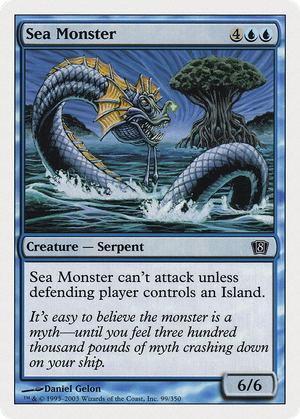
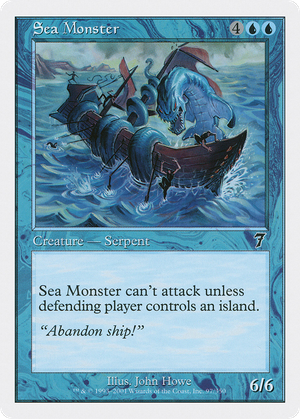
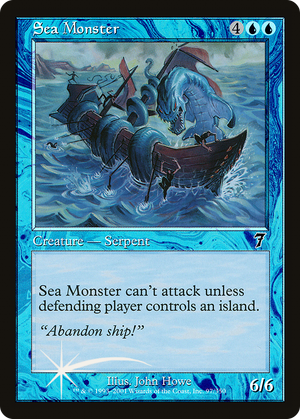
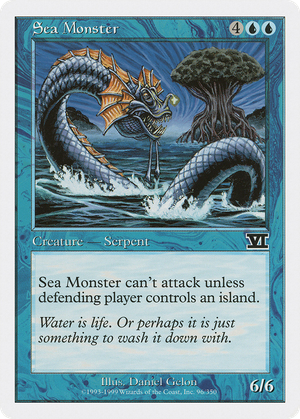
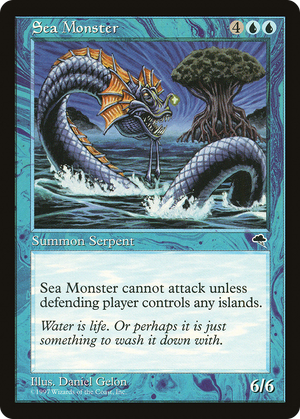
Sea Monster


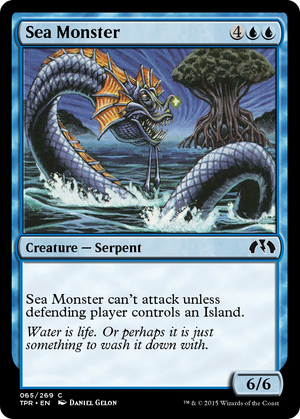
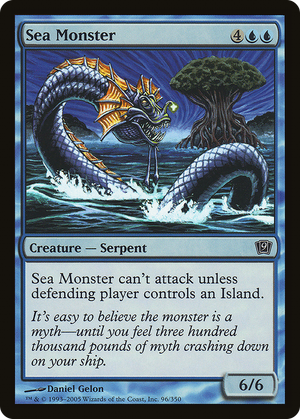
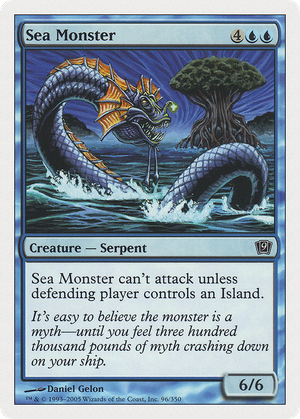
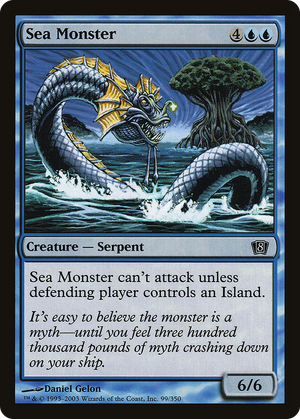
The clearest surviving example of the "Islandwalk in reverse" design tax that early sets used to balance big blue beaters. A 6/6 for six is a fine body, but the attack restriction hands the opponent the steering wheel: if they control no Island, this never swings, and a serpent that can only attack into the very decks built to race it spends most games as an overpriced wall. The conditional reads as flavor (a leviathan that only menaces the coastal cities) but functions as a mechanical brake, the same throttle that lets the Serpent line carry oversized stats at a fair rate. It is the inverse of the landwalk cycles that grant unblockable aggression against a land type; here the same condition gates whether the creature can move at all. Compare Segovian Leviathan or the islandwalking serpents that turned the seafaring theme into pressure rather than a liability: those cards weaponize the island-matters axis, while this one is held hostage by it. What keeps the design honest is that the restriction keys off the defending player, not the controller, so the card's relevance has nothing to do with what you build and everything to do with the manabase across the table. A blue creature whose offensive value is decided by an opponent's lands is a curiosity from an era still figuring out how to price large bodies, and it reads as a cautionary footnote in that conversation.
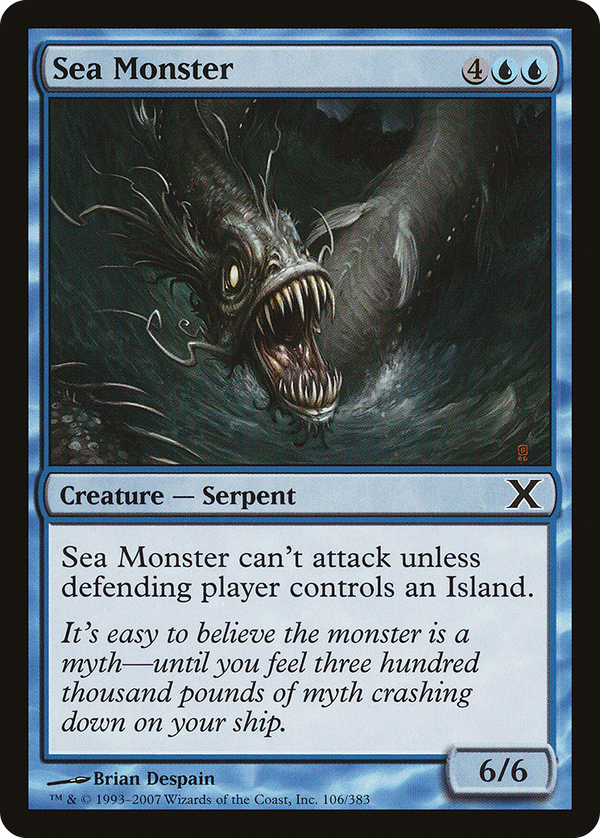
Rules text
Format Status
More formatsFewer formats
Other printings
- Tempest Remastered#65
- Ninth Edition#96★
- Ninth Edition#96
- Eighth Edition#99★
- Eighth Edition#99
- Seventh Edition#97
- Seventh Edition#97★
- Classic Sixth Edition#96