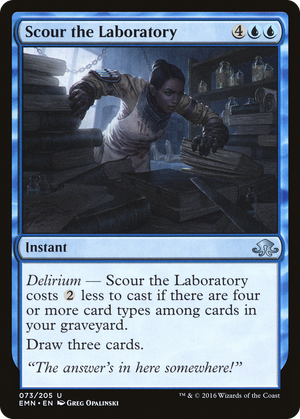
Scour the Laboratory


Six mana to draw three cards is a rate nobody plays; four mana to draw three at instant speed is the floor for a serious refill spell, and delirium is the bridge between those two numbers. The discount is unconditional once the graveyard holds four card types, which reframes the cost as a deckbuilding checklist rather than a tax: spread your bin across creatures, instants, sorceries, lands, and whatever else feeds it naturally, and the spell pays you back with a full hand the turn you hit the threshold. What makes the design coherent is that the conditions a delirium deck wants anyway (cheap creatures dying, spells cycling into the yard, fetched or sacrificed lands) double as the switch that turns this on. The instant-speed clause matters more than the headline draw: you can hold it open through an opponent's turn, resolve it on their end step once delirium is live, and untap into a refueled hand while your own main phase stays clear for threats. It belongs to a family of delirium payoffs that rewarded graveyard diversity over raw graveyard size, a distinction that shaped how those decks were built: you were never dumping cards indiscriminately, you were curating a spread, because the fourth card type was worth as much as any card in hand.
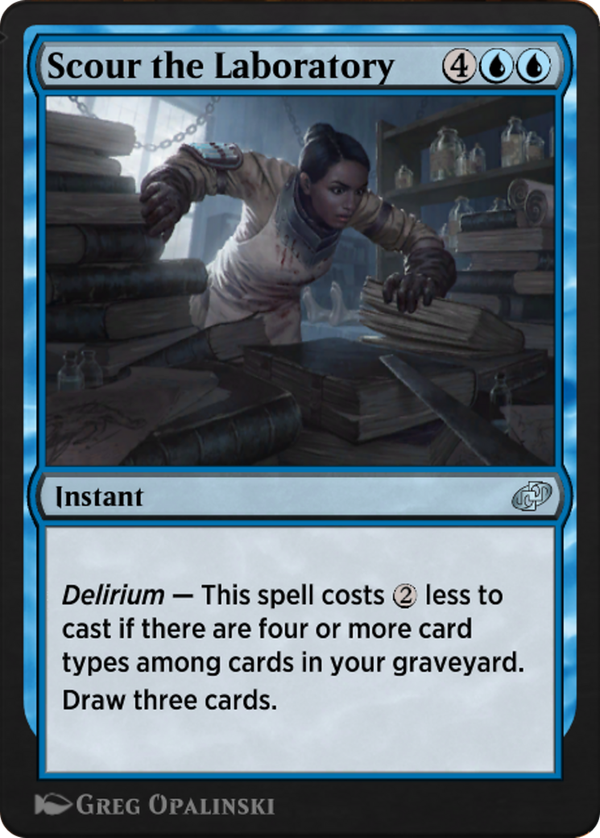
Rules text
 less to cast if there are four or more card types among cards in your graveyard.
Draw three cards.
less to cast if there are four or more card types among cards in your graveyard.
Draw three cards.