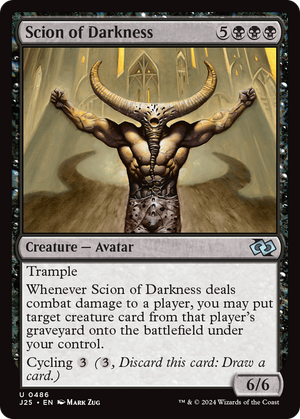
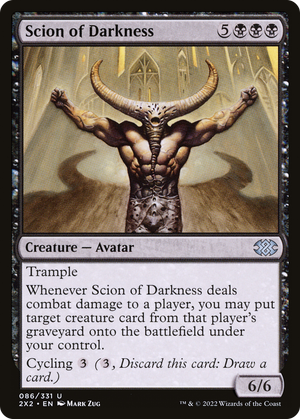
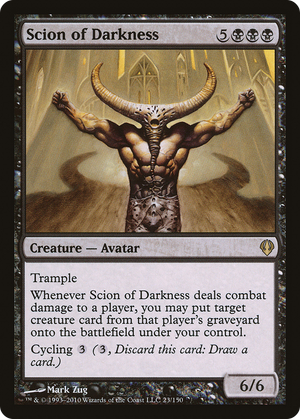
Scion of Darkness


Reanimation that demands you connect the punch, not just resolve the trigger. Most graveyard-raiding effects from this slice of the game's history let you dig into your own yard; this Avatar reaches across the table, pulling a creature out of the defending player's graveyard every time it lands combat damage and turning it loose under your control. That rewrites the math of trading with it. An opponent who chump-blocks or holds back a sweeper still has to weigh feeding their own dead to the enemy, and trample means they cannot fully wall it off with a single small blocker: enough damage pushes through to the player to fire the trigger anyway. The body backs the threat, with six toughness surviving most of the burn and small removal that wants to answer it before it connects. The cycling clause is the release valve that keeps a top-heavy eight-drop from rotting in hand: when the mana to hardcast it is not there, three mana and a discard turn it into a fresh card instead, so the deck never has to fear drawing its curve-topper early. That dual identity (a game-ending payoff on the turns you can cast it, a cantrip on the turns you cannot) is what made cycling such a load-bearing mechanic for expensive black creatures in this era. What you are buying is not a 6/6 with an enters trigger; it is a recurring tax on combat that converts your opponent's losses into your gains, one connected hit at a time.
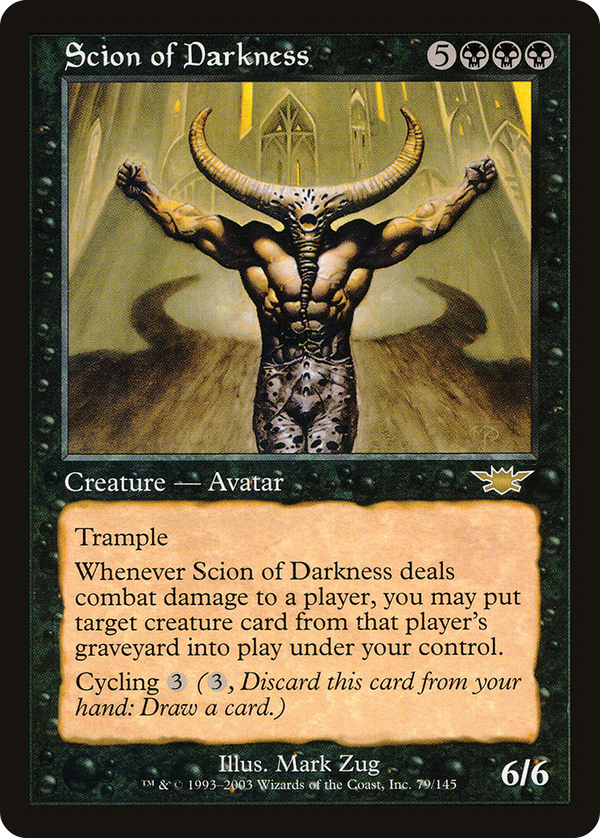
Rules text
 (, Discard this card: Draw a card.)