School of Piranha


Blue did not get to have an aggressive ground beater at this size in 1998, and the design's answer was to let it: hand over a generous 3/3 body for two mana, then attach a meter that runs against you every turn you keep it. The upkeep cost is the lever that prices the rate back in installments. Each turn you hold the Fish, you commit two more mana you would rather have spent developing your board, and if you ever decline to pay, it sacrifices itself before you have drawn for the turn. That makes it a finite resource by construction: a few turns of pressure before you let it go, not a permanent threat. The interesting wrinkle sits in the sequencing. The tax falls at your own upkeep, so you pay before you have seen what the opponent does, and the sacrifice triggers on your turn rather than theirs, which means the Fish costs you tempo on the very turns you most want to act. It is less a creature you play around than one that plays around you. It is a clean study in how a recurring cost can turn a front-loaded bargain into a slow squeeze on everything else you want to do, the "cheap now, expensive forever" trade rendered in the smallest possible space.
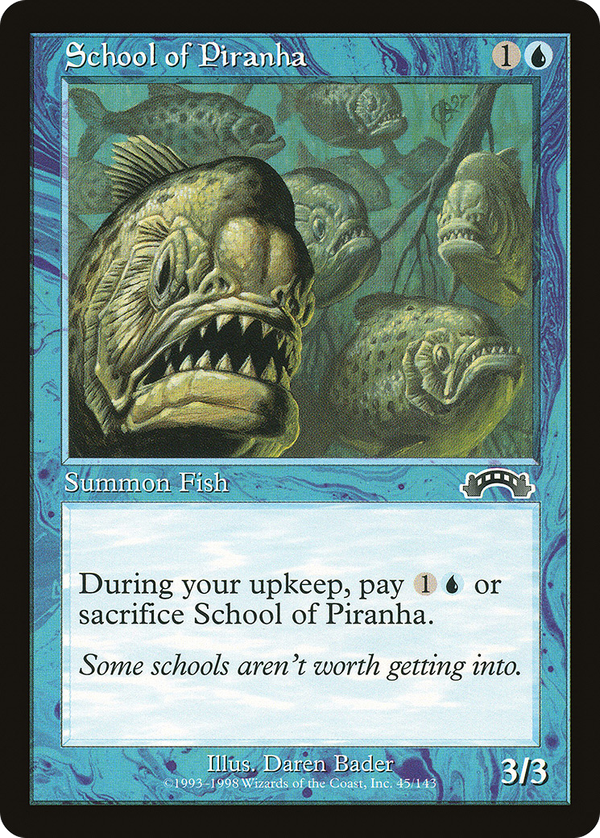
Rules text
.