Scholar of the Ages


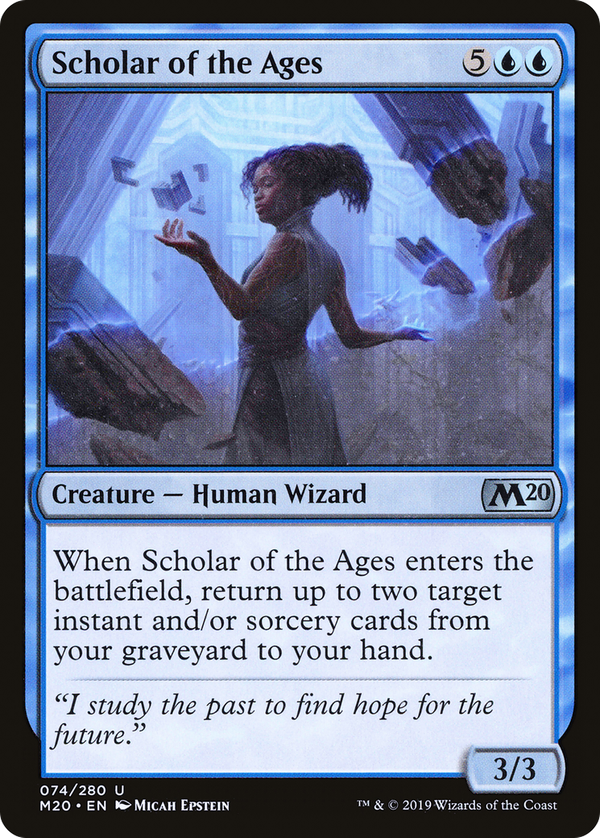
Seven mana buys a 3/3 body you were never planning to attack with, plus the real payload: two instant and/or sorcery cards lifted from your graveyard straight to hand, held on your own clock. That last part is the whole design. Snapcaster Mage rebuys a spell but chains you to casting it now; this hands the cards over clean, to sculpt and fire when the moment is right, and it grabs two instead of one. The trade is the toll, paid up front rather than folded into a cheap flash body, which reframes the card from tempo tool into grind engine. The value scales with what your bin already holds: two counterspells, two removal spells, a game-ending pair of sorceries. At the point in a long game when seven mana is trivial, that exchange is lopsided. The entry trigger also makes it recursion bait for its own package, since blinking, bouncing, or reanimating it repeats the recovery. It belongs to the blue lineage of value creatures that treat the graveyard as a second hand, closer to Mnemonic Wall's philosophy than to any efficient beater, and it is built for the deck that expects games to run long enough that raw card advantage, not the clock, decides them.