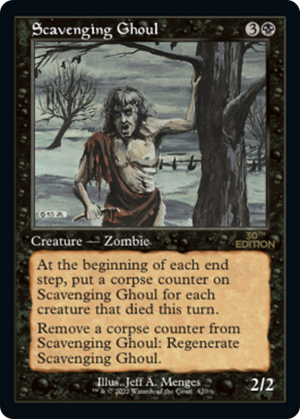
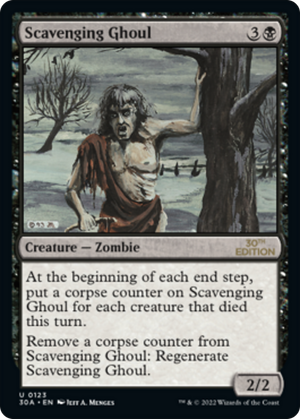
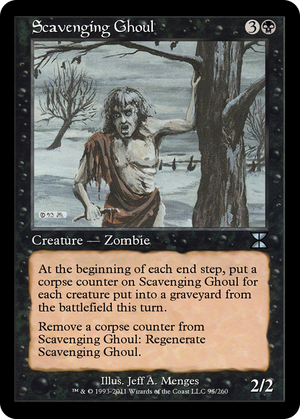
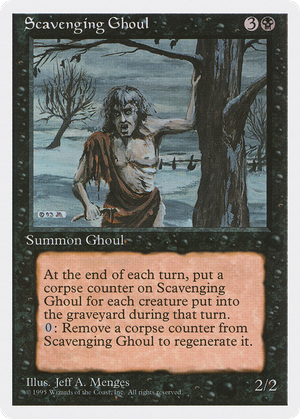
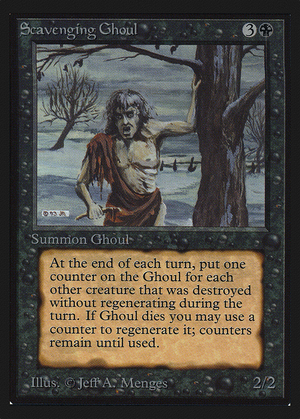
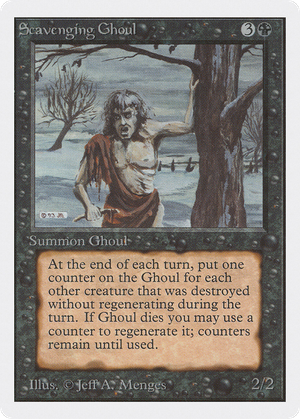
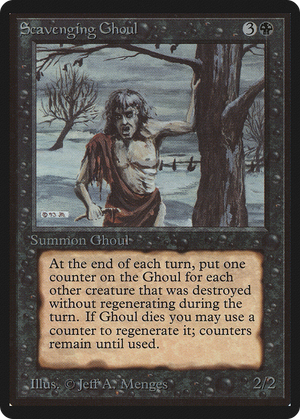
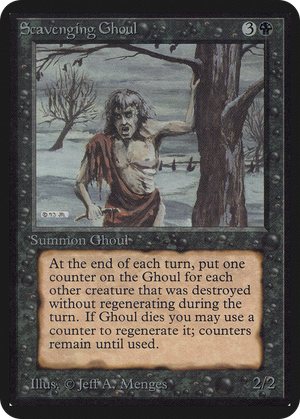
Scavenging Ghoul


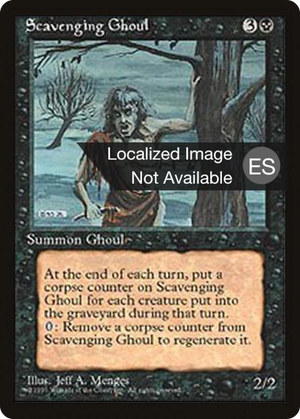
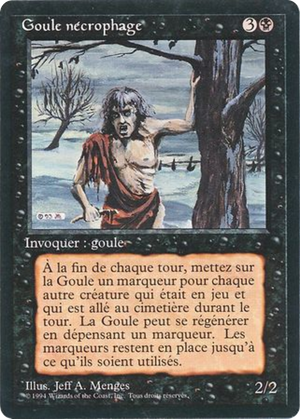
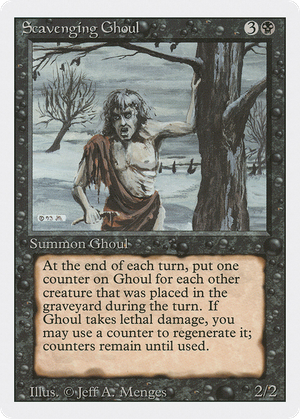
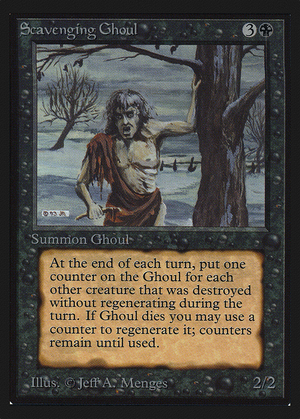
Black's earliest stab at a graveyard-fed combat creature, and a clear illustration of what regeneration was meant to model in the original design language. The corpse counters are a memory mechanic: the battlefield literally tracks the body count, and the Ghoul converts that record into a renewable shield. Each death feeds it, each regeneration spends from the pile, and the card asks the controller to treat creatures dying as a resource even though nothing here cares about cards in the yard, only creatures that died that turn. The trigger fires at the beginning of every end step, so the Ghoul harvests deaths regardless of whose creatures fell: an opponent's combat losses fatten it just as readily as your own trades, which makes it a creature that wants the board to churn rather than stall. The body itself is unremarkable for the cost, which is the point: the rate pays for the engine, not the stats. The same idea (deaths converted into protection or counters) resurfaces across later black creatures, and the Ghoul shows it in its barest form. It also captures how early Magic handled regeneration: a fragile keyword with a strict resource cost, balanced by the assumption that creatures died often and cheaply. Later sets phased regeneration out almost entirely, which leaves the Ghoul as a snapshot of a mechanic the game has largely moved past.
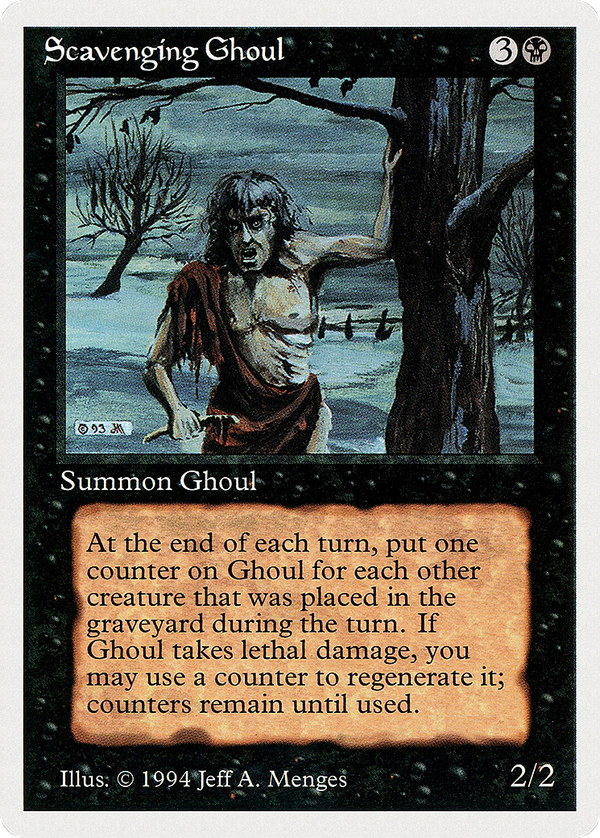
Rules text
Format Status
More formatsFewer formats
Other printings
- 30th Anniversary Edition#420
- 30th Anniversary Edition#123
- Masters Edition IV#95
- Fourth Edition#159
- Fourth Edition Foreign Black Border#159
- Foreign Black Border#128
- Revised Edition#128
- Collectors' Edition#127